Čovjek za sebe: Istraživanje o psihologiji etike

Čovjek za sebe: Istraživanje o psihologiji etike

Erich Fromm

Fromm explores psychoanalytic ethics, arguing that moral laws are based on human nature. He contrasts authoritarian and humanistic ethics, emphasizing the importance of freedom and productive character for the development of a healthy individual.

Published in 1947 as a sequel to Escape from Freedom, the work Man for Himself stands as one of Fromm’s most significant contributions to the fields of philosophical psychology and ethics. Its fundamental premise is that human beings can only be understood if we grasp their inner contradictions and the conditions of their existence.

Fromm draws a sharp distinction between authoritarian and humanistic ethics:

  • Authoritarian ethics posits an external authority (such as the state, religion, or a leader) as the source of moral values; obedience is the highest virtue, while disobedience is a sin.

  • Humanistic ethics locates authority and the source of moral law within the individual. It promotes the well-being of the individual and their full development, as ethical norms are rooted in human nature itself.

A central concept of the book is the "productive character"—an optimal form of human development in which a person utilizes their creative potential in love, work, and thought. Conversely, Fromm describes non-productive orientations (such as the marketing, hoarding, or exploitative orientations) that lead to alienation and a loss of a sense of purpose in modern consumer society.

The book offers profound insight into how individuals can become an end in themselves—rather than a means to serve the interests of others—and how to achieve true freedom grounded in self-respect and moral maturity.

Naslov originala
Man for Himself
Prevod
Hrvoje Lisinski
Urednik
Željko Falout
Naslovnica
Ratko Janjić-Jobo
Dimenzije
22 x 14 cm
Broj strana
237
Izdavač
Naprijed, Zagreb, 1980.
 
Latinica. Tvrde korice s omotom.
Jezik: Hrvatski.

Jedan primerak je u ponudi

Stanje:Korišćeno, u odličnom stanju
Dodato u korpu!
 

Zanima Vas i neka druga knjiga? Možete pretražiti našu ponudu pomoću pretrage ili prelistati knjige po kategorijama.

Možda će Vas zanimati i ovi naslovi

Kriza psihoanalize - Analitička socijalna psihologija i društvena teorija

Kriza psihoanalize - Analitička socijalna psihologija i društvena teorija

Erich Fromm

In the book, Fromm presents a strong critique of contemporary psychoanalysis. He believes that psychoanalysis has moved away from Freud's initial revolutionary vision and has turned into a technical, often sterile system that ignores deeper human and soci

Naprijed, 1989.
Hrvatski. Latinica. Tvrde korice s omotom.
6,34 - 6,98 €
Veličina i granice Freudove misli

Veličina i granice Freudove misli

Erich Fromm

In The Greatness and Limits of Freudian Thought, Erich Fromm analyzes Freud's contribution to understanding man and critically exposes the limitations of his theory, especially its biologic and authoritarian aspects.

Naprijed, 1989.
Hrvatski. Latinica. Tvrde korice s omotom.
6,98 €
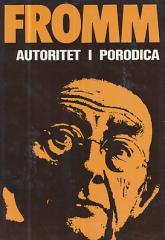
Autoritet i porodica

Autoritet i porodica

Erich Fromm

In his work "Authority and Family", Erich Fromm analyzes the transformation of authority and family in modern society. The foreword was written by Gvozden Flego, and the book also contains the study "Revolutionary Character".

Naprijed, 1989.
Hrvatski. Latinica. Tvrde korice s omotom.
6,74 €
O ljubavi

O ljubavi

Ralph Waldo Emerson

The booklet "On Love" by Ralph Waldo Emerson is a Croatian edition of the famous essay from the collection Essays: First Series (1841), one of the foundational texts of American transcendentalism.

Vlastita naklada, 1915.
Hrvatski. Latinica. Broširano.
4,36 €
Gorgija: O sofistima

Gorgija: O sofistima

Platon

Plato's dialogue Gorgias (c. 380 BC) in which Socrates debates with Gorgias, Polus, and Callicles about the nature of rhetoric, power, justice, and the good life. A harsh criticism of the Sophists and their oratory as flattery rather than knowledge.

Kontrast, 2025.
Srpski. Latinica. Broširano.
10,00 €
Pravo na laganje

Pravo na laganje

Immanuel Kant, Benjamin Constant

Kant argued that there is no right to lie because telling the truth is an absolute duty, while Constant advocated the possibility of an exception to the duty, arguing that one should lie for the common good, which sparked a famous philosophical debate.

Službeni glasnik, 2008.
Srpski. Latinica. Broširano.
8,36 €