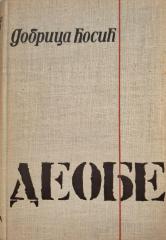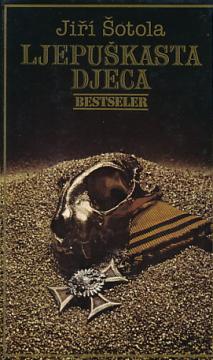
Ljepuškasta djeca

Ljepuškasta djeca

Jiří Šotola

The novel Beautiful Children depicts the world of adolescent rebels in a "re-education" colony - a prison disguised as a school. Written in the spirit of the Prague Spring, the work criticizes the communist system through a dynamic, cinematic narrative.

In the 1950s, a group of "pretty children" - young girls and boys convicted of petty offenses (theft, running away from home) - arrive at a special institution in the Czechoslovak countryside. The main narrator, a teenager with street instincts, meets eccentric companions: a rebellious girl with artistic dreams, a cynic who mocks "pedagogical" lessons, and a quiet dreamer. They are ruled by a bureaucratic hierarchy, overseers who "fatten" them up for obedience through parades, fake workshops, and moral sermons about socialism.

Everyday life is absurd: morning exercises under an alarm clock, "re-education" meetings where "mistakes" are confessed, but also secret clubs where children share stories of freedom. An escape attempt by one character sets off a chain reaction - the octopuses of the authorities (police, courts) catch the "fugitives" on false charges. The climax is a rebellion: the children burn down the barracks, facing the violence of the system. The novel ends openly – freedom for some, a return to the cycle for others.

Prison as a metaphor for society – "a prison that is not" stifles individuality with bureaucracy and indoctrination. Training obedience vs. the natural rebelliousness of youth; a dying regime that writhes under absurd laws. Šotola mixes humor, irony and tragedy, reminiscent of Kafka: the truth hurts, but it sets you free. The work celebrates children's energy against the machine of evil, warning of the dangers of fanaticism.

Exceptionally dynamic, it is recommended for fans of social satire such as Kundera or Hrabal's early works.

Titel des Originals
Malovany deti
Übersetzung
Dagmar Ruljančić
Editor
Zdravko Židovec
Titelseite
Nenad Dogan
Maße
19,5 x 12 cm
Seitenzahl
236
Verlag
August Cesarec, Zagreb, 1986.
 
Latein Schrift. Fester Einband mit Schutzumschlag.
Sprache: Kroatisch.
ISBN
8-63-930011-9

Es werden zwei Exemplare angeboten
Kopiennummer 1

Zustand:Gebraucht, in ausgezeichnetem Zustand
Zum Warenkorb hinzugefügt!

Kopiennummer 2

Zustand:Gebraucht, in ausgezeichnetem Zustand
Zum Warenkorb hinzugefügt!
 

Interessieren Sie sich für ein anderes Buch? Sie können das Angebot über unsere Suchmaschine suchen und finden oder Bücher nach Kategorien durchsuchen.

Diese Titel könnten Sie auch interessieren

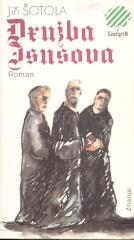
Družba Isusova

Družba Isusova

Jiří Šotola

The Society of Jesus (1969) by Jiří Šotola, the debut work of the Czech poet, is a historical novel set during the Counter-Reformation, which subtly alludes to contemporary conditions in Czechoslovakia under communism.

Znanje, 1988.
Kroatisch. Latein Schrift. Taschenbuch.
4,00 - 4,20
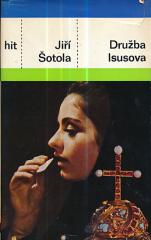
Družba Isusova

Družba Isusova

Jiří Šotola

The Society of Jesus (1969) by Jiří Šotola, the debut work of the Czech poet, is a historical novel set during the Counter-Reformation, which subtly alludes to contemporary conditions in Czechoslovakia under communism.

Znanje, 1975.
Kroatisch. Latein Schrift. Fester Einband mit Schutzumschlag.
2,98
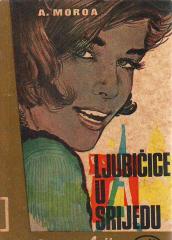
Kvaka braka

Kvaka braka

Melanie Gideon

Melanie Gideon, an American writer known for her humorous novels about family dynamics, dissects the monotony of marriage in the age of social media in The Marriage Trap (2012).

Algoritam, 2013.
Kroatisch. Latein Schrift. Taschenbuch.
7,36
Gradić gdje je vrijeme stalo

Gradić gdje je vrijeme stalo

Bohumil Hrabal

Bohumil Hrabal, a Czech writer known for his lyrical grotesque and humor, in his novel The Town Where Time Stood Still evokes childhood in the small town of Libeň (part of Prague), where time seems to stand still in a magical but melancholic world.

Hena Com, 2006.
Kroatisch. Latein Schrift. Taschenbuch.
7,62
Žene, bajke, kraljice

Žene, bajke, kraljice

Nada Gašić, Julijana Adamović, Nataša Govedić, Vera Vujović, Lada Žigo, Jadranka Pintarić, Jadran...

Women, Fairy Tales, Queens – is the first in a series of story collections intended for an adult audience in which nine Croatian female writers decided to give voice to female characters from fairy tales.

Kreativna mreža, 2021.
Kroatisch. Latein Schrift. Taschenbuch.
9,98
Grafiti & co

Grafiti & co

Vedran Vrsalović

500+ graffiti

Grafiti & co, 2006.
Kroatisch. Latein Schrift. Taschenbuch.
4,98