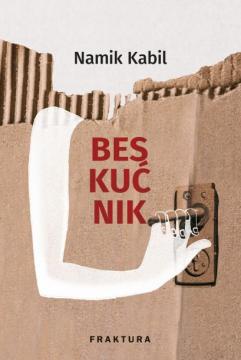
Beskućnik

Beskućnik

Namik Kabil

In the autobiographical novel Beskućnik Namik Kabil asks a universal and intimate question, where is our home - in Trebinje, Munich, Sarajevo or where we like to return?

In the novel Beskućnik Namik Kabil deals with the seemingly simple question of where our house is. Where is our home? Is it where we live or where we like to return; is it the house that we ourselves chose to live in or the one in which we grew up and which, in addition to memories, also carries the burden of emptiness that remains behind those who have left irretrievably? This very house of the author, which reminds us of final departures with every arrival, becomes the main character in this novel, which escapes both sale and demolition, and the new life intended for it by the heirs, and in this way it grows into a story, into a novel, bringing to saw the fragility of all our identities.

Namik Kabil, who says that he is braver in literature than in life, uses this courage to write powerful prose in Beskućnik not only about all our houses and moves, but also about universal issues of family relationships, love, losses, war and life migrations that the sense of belonging always put to the test again and again.

Urednik
Marina Vujčić
Naslovnica
Nikolina Žabčić
Dimenzije
21 x 14 cm
Broj strana
176
Izdavač
Fraktura, Zaprešić, 2024.
 
Latinica. Tvrde korice s omotom.
Jezik: Hrvatski.
ISBN
978-9-53358-720-2

Nema primeraka u ponudi

Poslednji primerak je nedavno prodat.
 

Zanima Vas i neka druga knjiga? Možete pretražiti našu ponudu pomoću pretrage ili prelistati knjige po kategorijama.

Možda će Vas zanimati i ovi naslovi

Dok ležah na samrti

Dok ležah na samrti

William Faulkner

Faulkner's 1930 novel, a classic example of modernist literature. It is often compared to Joyce's "Ulysses" for its innovative structure, but is more accessible due to its focus on family.

Rad, 1985.
Hrvatski. Latinica. Broširano.
3,26
Rudnik čvaraka

Rudnik čvaraka

Tomislav Šovagović

The debut work of Croatian writer Tomislav Šovagović, awarded the Josip and Ivan Kozarac Award in 2012, is a dedication to Slavonia – the region of his childhood that the author, born in Dalmatia, observes with foreign but tender eyes.

Mozaik knjiga, 20112.
Hrvatski. Latinica. Broširano.
11,56
Tri mušketira 1-2

Tri mušketira 1-2

Alexandre Dumas

Dumas' version of the story depicts the adventures of d'Artagnan and his friends from 1625 to 1628.

Epoha, 1966.
Hrvatski. Latinica. Tvrde korice s omotom.
Knjiga se sastoji od dva toma
9,48
Život je igra

Život je igra

Alberto Moravia

The book consists of several stories that explore the complexity of human behavior, often through an ironic and satirical depiction of everyday life.

Svjetlost, 1965.
Srpski. Latinica. Broširano.
3,46 - 3,72
I ne reče ni reči

I ne reče ni reči

Heinrich Böll

In Boll's novels, one of the central themes is the attempt to preserve basic moral values ​​in a time of terror, as well as in a period of material prosperity and corruption.

Svjetlost, 1965.
Srpski. Latinica. Broširano.
3,22 - 3,98
Andrićeva lestvica užasa

Andrićeva lestvica užasa

Svetislav Basara

A Serbian writer known for his satirical novels, Andrić's Ladder of Horrors dissects the Balkan mentality through a parable of Yugo-nostalgia and national myths. The title alludes to Ivo Andrić as a litmus test for criticism – Balkans claim him or reject

24 sata, 2021.
Srpski. Latinica. Broširano.
11,56