Iz Neretvanske krajine: slike i priče
Retka knjiga
Antikvitet

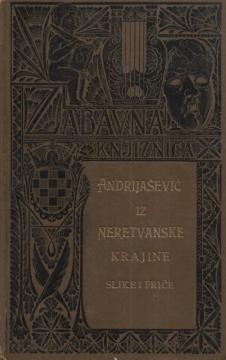
Iz Neretvanske krajine: slike i priče

Niko Andrijašević

The book "From the Neretva Region" brings stories and sketches from the lives of the inhabitants of the Neretva Valley, depicting their customs, poverty, loves, conflicts and everyday struggles in the Dalmatian hinterland.

From the Neretva Region is a collection of short stories and prose paintings by Croatian writer Niko Andrijašević. The book brings together a series of short stories and literary sketches inspired by life in the Neretva region. Among the texts are titles such as Stara prića, Pijanac, Ivan Benac, Grobarova smrt, Ljubav, Gspodin poglavar and Vatra u kamenitoj pustiji.

The work belongs to the tradition of Croatian realistic storytelling from the beginning of the 20th century. In his stories, Andrijašević depicts the everyday life of the inhabitants of the Neretva Valley, their social relationships, family conflicts, poverty, hard work and strong connection with their native land. He pays special attention to the characters of ordinary people – peasants, workers, fishermen and village dignitaries – trying to faithfully convey their speech, customs and way of life.

The stories are permeated with social motives, but also emotional and psychological portrayals of the characters. The author often describes love relationships, family tragedies, social injustices and the conflict of the individual with the environment. Elements of sentimentalism and regionalism can be recognized in his style, and the landscape of the Neretva region is not only the background of the plot but also an important part of the identity of the characters and their fate.

Critics have described Andrijašević as a writer who remained faithful to traditional realism in a period when modernist trends were already developing in Croatian literature. This is precisely why his stories have documentary value because they preserve a picture of social conditions, mentality and everyday life of the Dalmatian village at the turn of the 19th and 20th centuries.

Today, the book is considered a valuable regional literary testimony and one of the most significant works dedicated to the Neretva region and its people.

Dimenzije
19 x 13 cm
Broj strana
191
Izdavač
Matica hrvatska, Zagreb, 1907.
 
Latinica. Tvrde korice.
Jezik: Hrvatski.

Jedan primerak je u ponudi

Stanje:Korišćeno, u odličnom stanju
Specifičnost ovog primerka:
Ex Libris
Dodato u korpu!
 

Zanima Vas i neka druga knjiga? Možete pretražiti našu ponudu pomoću pretrage ili prelistati knjige po kategorijama.

Možda će Vas zanimati i ovi naslovi

Gospodo porotnici: Deset velikih sudskih slučajeva iz historije zločina

Gospodo porotnici: Deset velikih sudskih slučajeva iz historije zločina

Hans Habe

"Gentlemen of the Jury" by Hans Habe presents ten famous court cases of the 20th century, depicting the course of investigations, trials and motives for crimes, as well as the relationship between justice, politics and public opinion.

Naprijed, 1966.
Hrvatski. Latinica. Tvrde korice s omotom.
2,99 - 6,42
Dnevnik 1: Dnevnik 1914 - 17 (Davni dani I)

Dnevnik 1: Dnevnik 1914 - 17 (Davni dani I)

Miroslav Krleža

The 1914–17 diary records Krleža's writings from the First World War: personal dilemmas, pacifism, conflict with the militarism of the Monarchy, and intellectual maturation in the years of the collapse of the old world.

NIŠRO Oslobođenje, 1981.
Hrvatski. Latinica. Tvrde korice.
6,785,42
Djeca jedne zime

Djeca jedne zime

Dea Trier Morch

A documentary novel that follows the experiences of women in the maternity ward of Copenhagen City Hospital over the course of one month. The novel, in the form of a diary entry, follows the pregnancy and childbirth of six women at a gynecological clinic.

Globus, 1987.
Hrvatski. Latinica. Tvrde korice s omotom.
4,52 - 5,62
Kako stoje stvari: Predavanje održano u Domu JNA u Zagrebu 17. 12. 1952.

Kako stoje stvari: Predavanje održano u Domu JNA u Zagrebu 17. 12. 1952.

Miroslav Krleža

In his lecture How Things Are (1952), Krleža discusses the political and cultural situation of post-war Yugoslavia, emphasizing the need for critical thought, cultural renewal, and resistance to dogmatism.

Zora, 1953.
Hrvatski. Latinica. Broširano.
12,48
Dinamit: Povijest klasnog nasilja u Americi

Dinamit: Povijest klasnog nasilja u Americi

Louis Adamić

The book documents a century of violence in the American labor movement — from 19th-century mining strikes to bombings and clashes with police — and exposes the brutal background to America's "class war."

Naklada Binoza, 1933.
Hrvatski. Latinica. Tvrde korice s omotom.
7,24
Put u Jajce

Put u Jajce

Edvard Kocbek

In Put u Jajce, Edvard Kocbek provides personal and political testimony about key moments in Yugoslav history. The book is based on Kocbek's memories from the Second World War, especially the trip to Jajce in 1943.

Znanje, 1978.
Hrvatski. Latinica. Tvrde korice s omotom.
8,386,70