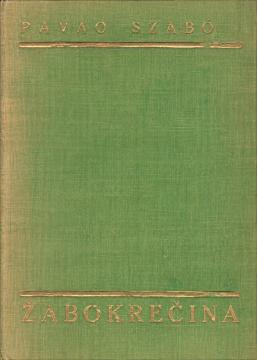
Žabokrečina
The love story of village servant Jolán and wealthy farmer Sándor Hajdu unfolds in rural Hungary, where tradition, prejudice and class divisions shape people's lives. A novel about love and the pursuit of happiness.
Can genuine love overcome social divisions and deeply rooted prejudice? In Žabokrečina (Békalencse, Duckweed), Hungarian writer Pál Szabó tells a story of love, social relationships and village life in the first half of the twentieth century.
At the centre of the novel is Jolán, a young village servant, whose life changes when she falls in love with Sándor Hajdu, a prosperous farmer and owner of a substantial estate. Their relationship challenges established class boundaries, traditional expectations and the divisions between wealthy landowners and poorer villagers.
Szabó portrays the everyday life of rural Hungary, exploring local customs, family relationships, conflicts and individual aspirations for a better future. His narrative combines social observation with a romantic storyline, idyllic scenes of village life and moments of humour.
One of the novel's central themes is the tension between social hierarchy and the individual's desire for personal happiness, revealing how inherited customs and economic differences influence human relationships.
Békalencse belongs to Hungarian interwar rural and socially engaged fiction. Its Croatian edition, published in 1933, also offers an interesting example of literary exchange between Hungarian and Croatian culture.
Jedan primerak je u ponudi
- Worn covers
- Restored spine