Jevgenij Petrov
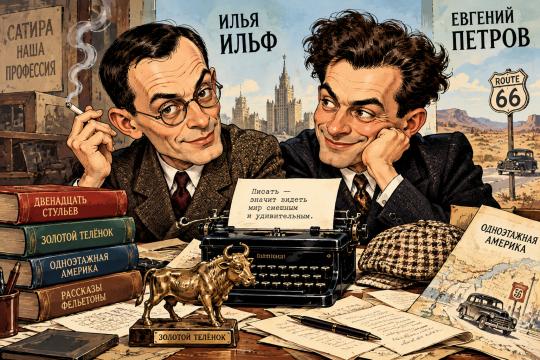
Yevgeny Petrov (Russian: Евгений Петров), born Yevgeny Petrovich Katayev, was a Russian and Soviet writer, journalist, screenwriter, and satirist; he was born on December 13, 1902, in Odessa, and died on July 2, 1942, in a plane crash. He is best known for his collaboration with Ilya Ilf, with whom he created two classics of Russian humorous literature: The Twelve Chairs and The Golden Calf.
He grew up in a family of teachers, and his older brother was the renowned writer Valentin Katayev. After completing his education, he worked as a journalist and in the criminal investigation service. In 1923, he moved to Moscow, where he became involved in literary and journalistic circles and began publishing humorous pieces and feuilletons.
His meeting with Ilya Ilf marked the beginning of an exceptionally successful literary partnership. Their novel The Twelve Chairs (1928) follows the adventures of Ostap Bender, an ingenious con man searching for jewels hidden inside furniture. The work became famous for its sharp satire, grotesque situations, and critique of bureaucracy, greed, and social hypocrisy.
In the sequel, The Golden Calf (1931), the authors once again feature Ostap Bender, exposing the contradictions of everyday Soviet life. Together, they also wrote the satirical cycles Unusual Stories from the Life of the City of Kolokolamsk (1928) and One Thousand and One Days, or The New Scheherazade (1929).
Following their travels across the United States in 1935 and 1936, they published the travelogue One-Story America (1937), in which they examine American society, technology, culture, and everyday life with a blend of humor and critical insight.
After Ilf’s death in 1937, Petrov continued to write independently, edit magazines, and work on film screenplays. During World War II, he served as a war correspondent, reporting from the front lines. He died in a plane crash while returning from an assignment.
His work is characterized by sharp social criticism, witty dialogue, vivid characterization, and masterful irony. Together with Ilf, he left an enduring mark on Russian literature, and the character of Ostap Bender became one of the most recognizable figures in Soviet satire.
Naslovi u ponudi
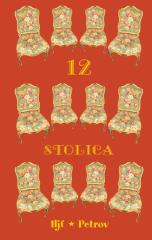
12 stolica
Eine satirische Schatzsuche im postrevolutionären Russland. Der ehemalige Adlige Ippolit Matwejewitsch Worojaninow und der Trickbetrüger Ostap Bender jagen Wertgegenständen hinterher und entlarven dabei die Gier und Absurditäten der sowjetischen Gesellsch
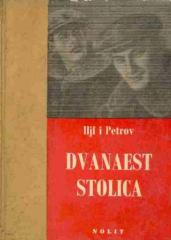
Dvanaest stolica
Die Hauptfigur des Romans ist der geniale Betrüger Ostap Bender, der diesmal in einem von zwölf in der gesamten Sowjetunion in die Luft gesprengten Polstersesseln nach Diamanten sucht.
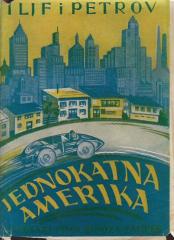
Jednokatna Amerika
Nach dem großen Erfolg von „Zwölf Stühle“ und „Das goldene Kalb“ reisten Iljf und Petrov während der Weltwirtschaftskrise durch die Vereinigten Staaten, übersetzten ihre Beobachtungen in den Roman „One-Story America“ und schrieben weiterhin im satirischen
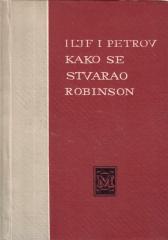
Kako se stvarao Robinson
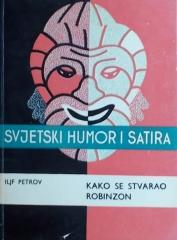
Kako se stvarao Robinzon
Delo prikazuje proces stvaranja književnog junaka i ismeva birokratiju, površnost i veštačko stvaranje „idealnih“ priča prema unapred određenim pravilima.
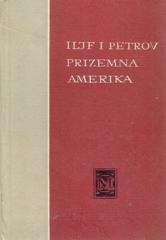
Prizemna Amerika
Krajem 1935. godine, poznati ruski pisački duo krenuo je na putovanje automobilom preko Sjedinjenih Država, gde su proveli ukupno tri i po meseca.
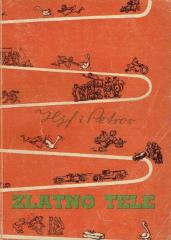
Zlatno tele
„Zlatno tele“ (1931) je briljantna satirična pikarska avantura, nastavak legendarnih „Dvanaest stolica“, gde se veliki šegadžija Ostap Bender vraća u punom sjaju – šarmantan, ciničan, nepopravljivo lukav i uvek korak ispred svih ostalih.
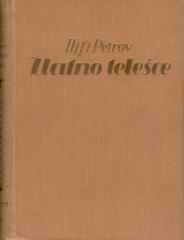
Zlatno telešce
Zlatno tele (1931) prati domišljatog prevaranta Ostapa Bendera, koji u Sovjetskoj Rusiji tokom prvog petogodišnjeg plana traži tajnog milionera kako bi se obogatio, susrećući se usput sa apsurdom birokratije, novim sovjetskim čovekom i sopstvenim padom.