Vjenceslav Novak
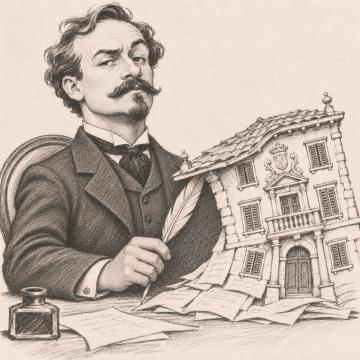
Vjenceslav Novak (1859–1905) knew how long a family crest could hang straight above the door of a house that had already started to lean. In Posljednji Stipančići (The Last of the Stipančić Family, 1899), the Senj patrician Ante still counts on the prestige of his name, though the household bills have been telling him for some time to count on something else as well. His wife Valpurga and daughter Lucija pay the highest price for the misunderstanding.
Born in Senj, Novak taught there before studying at the Prague Conservatory, where he qualified as an organist and a teacher of singing and music theory. On his return he taught music in Zagreb, wrote about it and co-edited the journal Gusle with Vjekoslav Klaić. Music also found its way into his novel Dva svijeta (Two Worlds, 1901), in which a gifted musician tries to make a living from the one thing he does well. The people around him, like many before and since, expect a great deal of art as long as the bill goes to someone else.
In Podgorske pripovijetke (1889), Novak writes about the people of the hinterland around Senj. Posljednji Stipančići returns to the town in the first half of the nineteenth century. It follows a declining family that stakes all its hopes on the son, Juraj, while Lucija needs permission even to leave the house. Her fate comes into view partly through what other people decide to do on her behalf. Family prestige makes for a remarkably precise division of labour. Some inherit it, others keep it up, and everybody would rather leave the expense out of the dinner conversation.
Novak also wrote about poverty in U glib (1901) and Iz velegradskog podzemlja (1905). The latter follows a Zagreb day labourer named Mika and his family, gradually revealing the daily deprivation behind an act of violence. Tito Dorčić appeared in 1906, a year after Novak died in Zagreb. Its fisherman’s son is sent away to study and ends up with the career his father planned for him. Novak often gives his characters just enough freedom for the reader to see what a little more would have meant to them.
Titles in our offer
Dva svijeta
A psychological novel about musician Amadej Zlatanić who, after studying in Prague, returns to Croatia, where he faces the misunderstanding of his petty-bourgeois surroundings and ends up in a madhouse. The conflict between artistic ideals and reality.
Dvie pripoviesti — Francuzovo razkuće; Što je krivo?
Two stories by Vjenceslav Novak, published in 1897, offer an introduction to a lesser-known part of his work and a historical example of Croatian literary publishing.

Dvije pripovijetke: Nezasitnost i bijeda / Iz velegradskog podzemlja
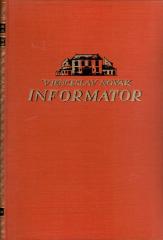
Informator
„Informator“ (1894) je kraće prozno delo Vjenceslava Novaka, koje je priredio Slavko Ježić (treći tom Sabranih dela). Jedan je od Novakovih društveno najangažovanijih tekstova i tipičan je za njegov realistički pristup.
Izabrane pripovijesti


Nikola Baretić
Nikola Baretić prati sudbinu glavnog junaka u senjskom okruženju, suočenog s ljubomorom, bračnim sukobima i društvenim pritiscima. Realistički roman o strastima, časti i propadanju u malograđanskoj sredini 19. stoljeća.
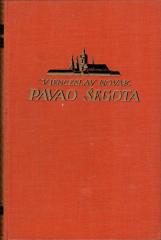
Pavao Šegota
Pavao Šegota, daroviti mladić iz siromašnog podgorskog kraja, odlazi na studij u Prag. Roman prati njegovu borbu s novim okruženjem, ljubavlju, siromaštvom i razočaranjima. Realistički prikaz propasti talenta u tuđini.

Podgorka
Podgorka prati život i sudbinu mlade žene iz siromašnog podgorskog kraja. Roman realistički prikazuje teške društvene prilike, običaje, siromaštvo i borbu za dostojanstvo u senjskom zaleđu 19. stoljeća.