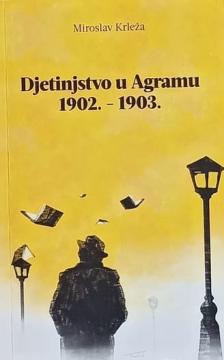
Djetinjstvo u Agramu 1902.-1903.
Kindheit in Agram 1902–1903 ist ein autobiografischer Bericht, in dem Krleža Zagreb um die Jahrhundertwende anhand von Szenen aus seiner Kindheit schildert: eine Stadt der Gegensätze, sozialer Unterschiede, Schulängste und erster Einblicke in die Welt der
In „Kindheit in Agram 1902–1903“ kehrt Miroslav Krleža in seine frühe Kindheit zurück und zeichnet ein vielschichtiges, emotionales und oft düsteres Bild von Zagreb – Agram – zur Zeit der österreichisch-ungarischen Monarchie. Es ist ein autobiografisches Fragment, das zugleich persönliche Erinnerung und kritisches Bild der Gesellschaft ist, in der der Schriftsteller aufwuchs. Krleža romantisiert die Kindheit nicht: Er betrachtet sie aus der Perspektive eines Erwachsenen, der genau weiß, wie früh Kinder Hierarchien, Ängsten und dem Druck ihrer Umgebung ausgesetzt sind.
Die von ihm beschriebenen Szenen reichen von häuslichen Gewohnheiten und der Erziehung in der Familie bis hin zu den Straßen von Agram – schlammig, kalt und streng nach Klassen getrennt. Die Schule steht im Mittelpunkt: Krleža beschwört eine Atmosphäre strenger Disziplin, autoritärer Lehrer und der Angst vor Regeln her, die Kinder unverständlich hinnehmen mussten. Aus der Perspektive von Kindern schildert es die erste Begegnung mit Ungerechtigkeit, sozialen Unterschieden und dem provinziellen Geist einer Umgebung, die sich als „moralisch“ präsentiert und zugleich von Heuchelei durchdrungen ist.
Die Beschreibung der Stadt und ihrer Bewohner ist keineswegs rein faktisch. Krležas Agram ist ein lebendiger Organismus: Sommerhitze, neblige Morgen, Stadtcafés, militärischer Alltag, Kioske, Straßenbahnen und die orientalischen Düfte der Straßenläden bilden ein Mosaik einer Stadt, die zwischen Alt und Neu, zwischen imperialen Uniformen und lokaler, rebellischer Energie pulsiert. In diesem Kontext entdeckt der kleine Miroslav seine ersten literarischen Impulse, die ersten visuellen Eindrücke, die später seine künstlerische Sensibilität prägen werden.
Der zentrale Wert dieses Textes liegt in der vielschichtigen Verbindung von Intimität und Gesellschaftsanalyse. In seinen Kindheitserinnerungen zeigt Krleža deutlich, woher sein späteres kritisches Bewusstsein rührt: von der Erfahrung eines ungerechten Schulsystems, von Begegnungen mit dem militarisierten Alltag und von einem Bewusstsein für soziale Unterschiede, das bereits in einem Alter stark spürbar war, in dem ein Kind eigentlich nur spielen und seiner Fantasie freien Lauf lassen sollte.
„Kindheit in Agram 1902–1903“ wird so zu mehr als einem autobiografischen Fragment – es ist das Bild einer Stadt, einer Zeit und der Entstehung eines ausgeprägten literarischen Bewusstseins, geschrieben in Krležas dichtem, eindrucksvollem und emotional aufgeladenem Stil.
Jedan primjerak je u ponudi