Što su Česi?: kratki pregled činjenica i pokušaj objašnjenja

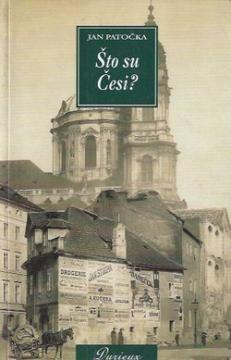
Što su Česi?: kratki pregled činjenica i pokušaj objašnjenja

Jan Patočka

In the book before you, Jan Patočka wrote a paradigmatic essay on the Central European identity of a Slavic people.

It was created from a series of letters that Jan Patočka wrote in German around 1973 to a friend in the Federal Republic of Germany. Later, he began reworking them, probably with the intention of publishing them as essays. The text exists today in several versions and reconstructions. The Croatian edition was made according to the translation into Czech by Vladimir Jochmann from 1985, which, under the editorship of Ivan Chvatík and Pavel Kouba, was published in Prague in 1992 by the Panorama publishing company in cooperation with the Jan Patočka Archive under the title Co jsou Češi?; it is edited according to the text in the German edition of Patočka's selected writings: Ausgewählte Schriften sv. 5, Klett-Cotta, Stuttgart 1992.

Naslov izvornika
Co jsou Češi? / Was sind die tschechen?
Prijevod
Manja Hribar
Urednik
Nenad Popović
Dimenzije
20 x 13 cm
Broj strana
131
Nakladnik
Durieux, Zagreb, 2000.
 
Latinica. Broširano.
Jezik: Hrvatski.

Jedan primjerak je u ponudi

Stanje:Korišteno, u odličnom stanju
Snižena cijena: 7,745,42
Popust od 30% vrijedi do 11.03.2026. 23:59
Dodano u košaricu!
 

Zanima Vas i neka druga knjiga? Možete pretražiti našu ponudu pomoću tražilice ili prelistati knjige po kategorijama.

Možda će Vas zanimati i ovi naslovi

Esekerski tekstovi / Essekerische texte

Esekerski tekstovi / Essekerische texte

Velimir Petrović

A very rare and valuable publication on the almost extinct Esser dialect. The Esser texts, collected and translated by Velimir Petrović, are presented in three languages ​​- in the Esser dialect and in German and Croatian translation. The book also includ

Njemačka zajednica podunavskih Švaba u Hrvatskoj, 2011.
Hrvatski. Latinica. Tvrde korice.
27,42
Proizvodnja pokljuka u Požeškom Novom Selu: Separat

Proizvodnja pokljuka u Požeškom Novom Selu: Separat

Zdenka Lechner

Zdenka Lechner, the first ethnologist at the Museum of Slavonia (1951–1965), made significant contributions to the study of the traditional culture of Slavonia, including the use of pokljuc – earthen lids for baking bread and pastries on the hearth.

Muzej Slavonije, 1962.
Hrvatski. Latinica. Broširano.
6,32
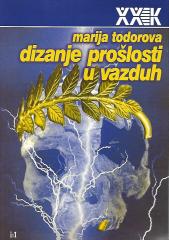
Dizanje prošlosti u vazduh: Ogledi o Balkanu i Istočnoj Evropi

Dizanje prošlosti u vazduh: Ogledi o Balkanu i Istočnoj Evropi

Marija Todorova

A collection of essays by the Bulgarian historian Maria Todorova (known for Imaginary Balkans), compiled especially for the 20th Century Library. Indispensable for understanding post-communist transitions, culture of memory and Balkan studies.

Biblioteka XX vek, 2010.
Srpski. Latinica. Broširano.
8,445,91
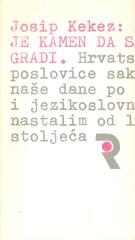
Svaki je kamen da se kuća gradi: Hrvatske poslovice sakupljene u naše dane po književnim i jezikoslovnim djelima nastalima od 12. do 19. stoljeća

Svaki je kamen da se kuća gradi: Hrvatske poslovice sakupljene u naše dane po književnim i jezikoslovnim djelima nastalima od 12. do 19. stoljeća

Josip Kekez

An anthological collection with comments by Josip Kekez, a Croatian folklorist and Slavist. A classic work of Croatian folkloristics from the 1980s.

Izdavački centar Revija, 1986.
Hrvatski. Latinica. Broširano.
3,86
Eseji i članci

Eseji i članci

Ljubo Karaman

The collection Essays and Articles by Ljubo Karaman, an eminent art historian, includes a series of texts on Croatian art, with an emphasis on the medieval heritage of Dalmatia and its connection with European cultural movements.

Matica hrvatska, 1939.
Hrvatski. Latinica. Tvrde korice.
10,34