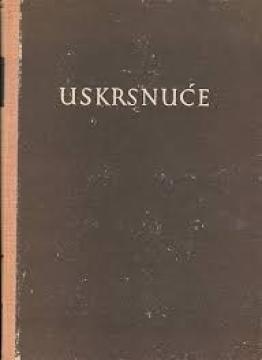
Uskrsnuće
Rijetka knjiga

Uskrsnuće

Lav N. Tolstoj

In his last great novel, Resurrection (1899), Tolstoy combines literary artistry with profound moral and philosophical reflections, making it a key work of his late oeuvre.

In Tsarist Russia, Dmitri Nekhludoff, an aristocrat, enjoys his privileges as his past fades from his memory. Everything changes when, in court, he recognizes Katusha Maslova, accused of murder. She was once an innocent girl whom he seduced and abandoned, leaving her pregnant and without support, which pushed her into prostitution. The encounter shakes Nekhludoff, awakening a sense of guilt and setting him on a path of moral inquiry. He decides to abandon his comfortable life and follow Katusha into exile in Siberia, seeking redemption.

The journey reveals the cruelty of the justice system, the injustices of prison, and the hypocrisy of society. Through encounters with other prisoners, Nekhludoff becomes aware of deep social inequalities, while Katusha undergoes her own spiritual transformation. The novel explores themes of repentance, justice, and spiritual awakening, reflecting Tolstoy's Christian anarchism and pacifism.

Resurrection is the culmination of Tolstoy's late work, where he moves away from the epic breadth of War and Peace and the intimate psychology of Anna Karenina, focusing on moral reform and criticism of social institutions. The work reflects his radical philosophy, imbued with ideas about a simple life and rejection of materialism.

The novel was controversial for its harsh criticism of the church, government, and judiciary, leading to Tolstoy's excommunication from the Russian Orthodox Church in 1901. Readers and critics were divided: some praised its moral depth, while others found it too didactic. Nevertheless, the novel had a global impact, inspiring debates about justice and humanity, and is now considered a classic that illuminates Tolstoy's vision of a more just world.

Naslov izvornika
Воскресение
Prijevod
Iso Velikanović
Urednik
Oto Šolc
Dimenzije
20 x 14 cm
Broj strana
413
Nakladnik
Matica hrvatska, Zagreb, 1948.
 
Latinica. Tvrde korice.
Jezik: Hrvatski.

Jedan primjerak je u ponudi

Stanje:Korišteno, u dobrom stanju (tragovi korištenja)
Oštećenja / nepogodnosti:
  • Abgenutzte Bezüge
  • Spuren von Patina
Dodano u košaricu!
 

Zanima Vas i neka druga knjiga? Možete pretražiti našu ponudu pomoću tražilice ili prelistati knjige po kategorijama.

Možda će Vas zanimati i ovi naslovi

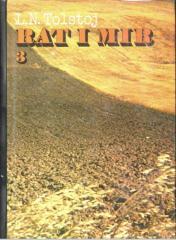
Rat i mir 3

Rat i mir 3

Lav Nikolajevič Tolstoj
Nakladni zavod Matice hrvatske, 1979.
Hrvatski. Latinica. Tvrde korice s ovitkom.
5,984,49
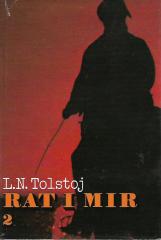
Rat i mir 2

Rat i mir 2

Lav Nikolajevič Tolstoj
Nakladni zavod Matice hrvatske, 1979.
Hrvatski. Latinica. Tvrde korice s ovitkom.
5,98
Krivotvoreni kupon i druge pripovijesti

Krivotvoreni kupon i druge pripovijesti

Lav Nikolajevič Tolstoj

Die Geschichten „Morgen eines Adligen“, „Aus den Aufzeichnungen des Fürsten Nechljudow“, „Notizen des Markierers“, „Die Waage“, „Zwei Husaren“, „Der Gefangene im Kaukasus“, „Der gefälschte Coupon“, „Die Todesnotizen des alten Fjodor Kusmitsch“ und „Warum?

Nakladni zavod Hrvatske, 1979.
Hrvatski. Latinica. Tvrde korice s ovitkom.
5,62
Čičikovljeve pustolovine ili Mrtve duše

Čičikovljeve pustolovine ili Mrtve duše

Nikolaj Vasiljevič Gogolj

Der Roman „Tote Seelen“ war ursprünglich als Gedicht in drei Teilen konzipiert, basierend auf Dantes Göttlicher Komödie, die in drei Teile unterteilt war: Hölle, Fegefeuer und Paradies, aber er schrieb nur einen, der 1842 veröffentlicht wurde, und fünf Fr

Naprijed, 1960.
Hrvatski. Latinica. Tvrde korice s ovitkom.
6,32
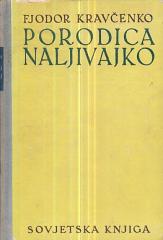
Porodica Naljivajko

Porodica Naljivajko

Fjodor Kravčenko
Nakladni zavod Hrvatske, 1948.
Hrvatski. Latinica. Tvrde korice s ovitkom.
2,50
Šinjel i druge pripovijetke

Šinjel i druge pripovijetke

Nikolaj Gogolj

Die Geschichte Gogols ist eine Geschichte von tragischem Talent, Mystik und Wahnsinn, von einem Manuskript, das verbrannte, von einer Nase und einem Mantel, von einem Zuhörer und toten Seelen.

Civitas, 2004.
Hrvatski. Latinica. Broširano.
6,48