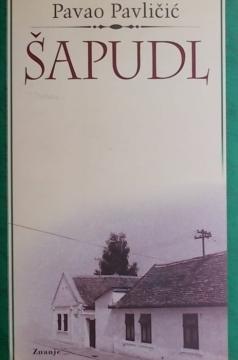
Šapudl

Šapudl

Pavao Pavličić

Pavao Pavličić, born in Vukovar (1946), brings a deeply emotional autobiographical story about his childhood and hometown in his novel Šapudl. One of the most moving books about the Homeland War, praised for its authenticity and depth.

The book was written during the Homeland War in 1991, when Pavličić published fragments in the magazine Republika about Šapudl Street in Vukovar, where he grew up. Šapudl, the name derived from the local word for "paw" or "heel", symbolizes this specific Vukovar street – a mixture of a multiethnic community, everyday life and urban culture of Slavonia.

The story takes place in the 1950s and 1960s, through the eyes of a young boy observing the world of his family and neighbors. Pavličić masterfully depicts Vukovar as a vibrant, multicultural metropolis – with Hungarian, Serbian, Croatian and German influences, shops, the Danube River and an industrial ambience. Childhood is colored by the joy of games, but also by the poverty of the post-war period, family relationships, school adventures and encounters with eccentric characters: a grandmother who cooks according to old recipes, a working father, neighbors who share stories. The book evokes the smells of baked bread, the sounds of street noise, and the warmth of community, but also hints at traces of historical traumas – from World War II to premonitions of future conflicts.

The emotional climax comes in the extended section, where Pavličić deals with the 1991 war and the urbocide over Vukovar. As a witness, he describes the city's destruction, losses, and post-war reconstruction, adding 50 pages about Vukovar to the present day: demographic changes, memorials, and the struggle to preserve its identity. Šapudl becomes a metaphor for the lost, yet resilient heart of Vukovar – a moving elegy for a homeland ravaged by war but preserved by memory.

Editor
Zlatko Crnković
Titelseite
Nikica Ostarčević
Maße
20 x 13,5 cm
Seitenzahl
187
Verlag
Znanje, Zagreb, 1995.
 
Latein Schrift. Hardcover.
Sprache: Kroatisch.
ISBN
978-9-53612-470-1

Im Angebot sind keine Exemplare vorhanden

Das letzte Exemplar wurde kürzlich verkauft.


Interessieren Sie sich für ein anderes Buch? Sie können das Angebot über unsere Suchmaschine suchen und finden oder Bücher nach Kategorien durchsuchen.

Diese Titel könnten Sie auch interessieren

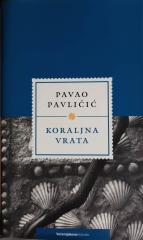
Koraljna vrata

Koraljna vrata

Pavao Pavličić

Wie kann man Gymnasiasten davon überzeugen, Gundulićs Osman zu lesen? Die Frage ist schwierig, aber die Antwort ist einfach. Damit sie Pavličić vor Gundulić lesen.

Večernji list, 2004.
Kroatisch. Latein Schrift. Fester Einband mit Schutzumschlag.
3,26 - 4,78
Eter

Eter

Pavao Pavličić
Znanje, 1983.
Kroatisch. Latein Schrift. Hardcover.
4,99
Dani hvarskog kazališta. Počeci u hrvatskoj književnosti i kazalištu

Dani hvarskog kazališta. Počeci u hrvatskoj književnosti i kazalištu

Maja Bošković Stuli, Dunja Fališevac, Milovan Tatarin, Lahorka Plejić Poje, Pavao Pavličić, Helen...
Hrvatska akademija znanosti i umjetnosti (HAZU), 2008.
Kroatisch. Latein Schrift. Taschenbuch.
9,99
Crna kutija

Crna kutija

Amos Oz

Crna kutija je kaleidoskop bračnog života i ljubavnih veza. To je roman koji implicitno govori o svima nama.

Hena Com, 2001.
Kroatisch. Latein Schrift. Hardcover.
10,988,24
Proces

Proces

Franz Kafka

Kafka je napisao „Proces“ između 1914. i 1915. godine, objavljen posthumno 1925. godine. Roman je nedovršen, ali sa dodatnim završnim poglavljem koje je napisao Maks Brod. Izdanje sa predgovorom B. Živojinovića i pogovorom Valtera Kilija.

BIGZ, 1990.
Serbisch. Latein Schrift. Taschenbuch.
4,26
Magična ljubavna kutijica

Magična ljubavna kutijica

Santa Montefiore

„Čarobna kutija ljubavi“ (2002) prati životnu priču Federike Kampione, koja počinje u Vinja del Maru, u Čileu, leta 1982. godine. Montefiore stvara epsku priču o rastu, gde magija nije samo u kutiji, već i u hrabrosti da se oslobodimo prošlosti.

Mozaik knjiga, 2006.
Kroatisch. Latein Schrift. Hardcover.
7,34