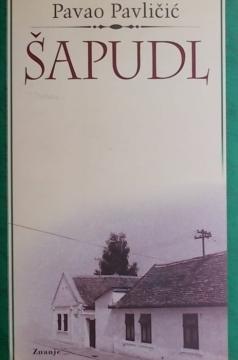
Šapudl

Šapudl

Pavao Pavličić

Pavao Pavličić, born in Vukovar (1946), brings a deeply emotional autobiographical story about his childhood and hometown in his novel Šapudl. One of the most moving books about the Homeland War, praised for its authenticity and depth.

The book was written during the Homeland War in 1991, when Pavličić published fragments in the magazine Republika about Šapudl Street in Vukovar, where he grew up. Šapudl, the name derived from the local word for "paw" or "heel", symbolizes this specific Vukovar street – a mixture of a multiethnic community, everyday life and urban culture of Slavonia.

The story takes place in the 1950s and 1960s, through the eyes of a young boy observing the world of his family and neighbors. Pavličić masterfully depicts Vukovar as a vibrant, multicultural metropolis – with Hungarian, Serbian, Croatian and German influences, shops, the Danube River and an industrial ambience. Childhood is colored by the joy of games, but also by the poverty of the post-war period, family relationships, school adventures and encounters with eccentric characters: a grandmother who cooks according to old recipes, a working father, neighbors who share stories. The book evokes the smells of baked bread, the sounds of street noise, and the warmth of community, but also hints at traces of historical traumas – from World War II to premonitions of future conflicts.

The emotional climax comes in the extended section, where Pavličić deals with the 1991 war and the urbocide over Vukovar. As a witness, he describes the city's destruction, losses, and post-war reconstruction, adding 50 pages about Vukovar to the present day: demographic changes, memorials, and the struggle to preserve its identity. Šapudl becomes a metaphor for the lost, yet resilient heart of Vukovar – a moving elegy for a homeland ravaged by war but preserved by memory.

Urednik
Zlatko Crnković
Naslovnica
Nikica Ostarčević
Dimenzije
20 x 13,5 cm
Broj strana
187
Izdavač
Znanje, Zagreb, 1995.
 
Latinica. Tvrde korice.
Jezik: Hrvatski.
ISBN
978-9-53612-470-1

Nema primeraka u ponudi

Poslednji primerak je nedavno prodat.
 

Zanima Vas i neka druga knjiga? Možete pretražiti našu ponudu pomoću pretrage ili prelistati knjige po kategorijama.

Možda će Vas zanimati i ovi naslovi

Koraljna vrata

Koraljna vrata

Pavao Pavličić

How to persuade high school students to read Gundulić's Osman? The question is difficult, but the answer is simple. So that they read Pavličić before Gundulić.

Večernji list, 2004.
Hrvatski. Latinica. Tvrde korice s omotom.
3,26 - 4,78
Eter

Eter

Pavao Pavličić

"Eter" je četvrti roman poznatog hrvatskog književnika Pavla Pavličića u kojem govori o dvojici zagrebačkih novinara koji odlaze u jedan panonski gradić da naprave reportažu o divljim radio stanicama.

Znanje, 1983.
Hrvatski. Latinica. Tvrde korice.
4,99
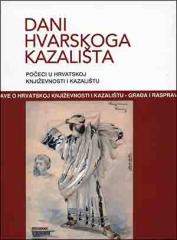
Dani hvarskog kazališta. Počeci u hrvatskoj književnosti i kazalištu

Dani hvarskog kazališta. Počeci u hrvatskoj književnosti i kazalištu

Maja Bošković Stuli, Dunja Fališevac, Milovan Tatarin, Lahorka Plejić Poje, Pavao Pavličić, Helen...
Hrvatska akademija znanosti i umjetnosti (HAZU), 2008.
Hrvatski. Latinica. Broširano.
9,99
Tri mušketira 1-2

Tri mušketira 1-2

Alexandre Dumas

Dumasova verzija priče prikazuje avanture d’Artagnana i njegovih prijatelja od 1625 do 1628.

Epoha, 1966.
Hrvatski. Latinica. Tvrde korice s omotom.
Knjiga se sastoji od dva toma
9,48
Crna kutija

Crna kutija

Amos Oz

Crna kutija kaleidoskop je bračnog života i ljubavnih odnosa. Roman je to koji implicitno priča o svima nama.

Hena Com, 2001.
Hrvatski. Latinica. Tvrde korice.
10,98
Pustolovine Toma Sawyera

Pustolovine Toma Sawyera

Mark Twain

Pustolovine Toma Sawyera prvi je pravi realistički dječji roman, ne samo u američkoj nego i u svjetskoj dječjoj književnosti. Najpoznatije Twainovo djelo i omiljeno dječje štivo u kojem je pisac opisao svoje dječačke doživljaje.

Nakladni zavod Hrvatske, 1947.
Hrvatski. Latinica. Tvrde korice.
16,32