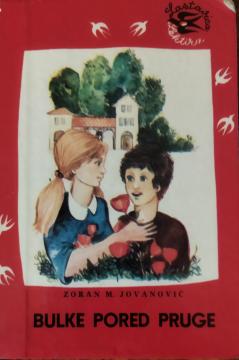
Bulke pored pruge
A six-year-old boy grows up near small railway stations where his father works as a railwayman. The railway line, poppies, school, and friends define his childhood, which is abruptly cut short by war and fear.
Poppies by the Railway is an autobiographical children's novel by Zoran M. Jovanović, narrated in the first person as a recollection of a childhood spent near small railway stations. The narrator is six years old when he moves with his parents to a station where his father works as a railwayman. Their new home is located above the station premises, and the world of trains, tracks, signals, switches, and red railway caps becomes a source of endless fascination for the boy.
He is particularly captivated by the red poppies growing alongside the black tracks. They become one of the most significant symbols of his childhood, linked to nature, a carefree spirit, and memories of life by the railway. The boy meets the switchman and other locals, starts school, makes friends, and experiences his first childhood crushes. His daily life is filled with games, walks along the tracks, watching trains, fishing, building sandcastles, and numerous small discoveries.
The family moves again due to his father's job, and the boy must adapt to a new station and new friends. This carefree life is interrupted by the Second World War. Trains begin carrying soldiers, school closes, and men are taken away—including the boy's father. He and his mother flee to a convent, where children are hiding from the army. When his father finally returns, the world they once knew is no longer the same.
The novel contrasts the beauty of childhood with the destruction brought by war. Red poppies by the railway tracks symbolize the warmth of memories and life that endures despite losses, while saying goodbye to small stations marks the end of an important period of growing up.
One copy is available