Mati

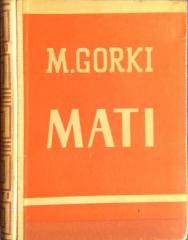
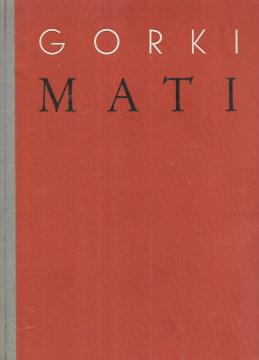
Mati

Maksim Gorki

Maxim Gorky's novel "Mother" was published in 1906 and is one of the key works of Russian social realism. The work depicts the awakening of the working class in Russia through characters and events that emphasize social injustices and the need for revolut

The novel is set in a working-class neighborhood in an industrial suburb. The main character is Pelagija Nilovna Vlasova, widow of a worker and mother of a young man, Pavel Vlasov. Pelagia is portrayed as a humble, insecure and ignorant woman who leads a life full of suffering, enduring the poverty and rudeness of her late husband. However, her life changes when her son Pavel begins to participate in the revolutionary movement.

Pavel connects with a group of workers who organize secret meetings and spread revolutionary literature among the workers. Pelagia, although at first confused and worried about Paul's activities, gradually becomes aware of the social injustices affecting the workers. Through interacting with revolutionaries and witnessing injustices, she begins to understand the ideas that Pavel and his comrades advocate.

As the story progresses, Pelagia takes an increasingly active role in revolutionary activities. Her role as "mother" symbolizes a motherly attitude towards the entire labor movement. She becomes a messenger who transmits forbidden literature and participates in the organization of workers' meetings, risking her own life.

The novel culminates with Pavlo's arrest during a protest. Despite the loss of her son, Pelagia continues to fight, symbolizing the unwavering spirit of the revolution. Through her character, Gorky shows the transformation of an ordinary woman into a strong and determined revolutionary, emphasizing the power of change and solidarity among workers.

"Mati" is one of the most important works that shaped the literature of social realism and remains a powerful representation of the struggle for justice and human rights.

Maße
20 x 15 cm
Seitenzahl
435
Verlag
Novo pokolenje, Beograd, 1948.
 
Latein Schrift. Hardcover.
Sprache: Kroatisch.

Angeboten wird ein Exemplar

Zustand:Gebraucht, in sehr gutem Zustand
Nachteile/Unannehmlichkeiten:
  • Traces of patina
Zum Warenkorb hinzugefügt!
 

Interessieren Sie sich für ein anderes Buch? Sie können das Angebot über unsere Suchmaschine suchen und finden oder Bücher nach Kategorien durchsuchen.

Diese Titel könnten Sie auch interessieren

Moji univerziteti

Moji univerziteti

Maksim Gorki
Rad, 1959.
Serbisch. Latein Schrift. Taschenbuch.
0,99
Mati

Mati

Maksim Gorki

Maxim Gorky's novel "Mother" was published in 1906 and is one of the key works of Russian social realism. The work depicts the awakening of the working class in Russia through characters and events that emphasize social injustices and the need for revolut

Glas rada, 1950.
Kroatisch. Latein Schrift. Fester Einband mit Schutzumschlag.
4,36
Djetinjstvo

Djetinjstvo

Maksim Gorki
Mladost, 1982.
Kroatisch. Latein Schrift. Hardcover.
2,99 - 3,98
Dekanov decembar

Dekanov decembar

Saul Bellow

In Bucharest, American Dean Albert Corde is accompanied by his wife, of Romanian origin, whose mother, a famous scientist, is seriously ill.

Veselin Masleša, 1990.
Kroatisch. Latein Schrift. Fester Einband mit Schutzumschlag.
4,98
Plesala je jedno ljeto

Plesala je jedno ljeto

Per Olof Ekström

An intimate and tragic tale of first love, coming of age, and the conflict between youthful freedom and societal norms, One Summer Dance remains a powerful story of love and loss that resonates with readers today.

Mladinska knjiga Založba, 1990.
Kroatisch. Latein Schrift. Fester Einband mit Schutzumschlag.
5,32 - 5,34
Bivši

Bivši

Andrea Semple

The former, Andrea Semple's debut novel, satirically depicts the rituals of love in the big city through the eyes of the smart and witty Martha Seymour, a London columnist who advises readers on trapped hearts.

Marjan tisak, 2005.
Kroatisch. Latein Schrift. Taschenbuch.
5,26