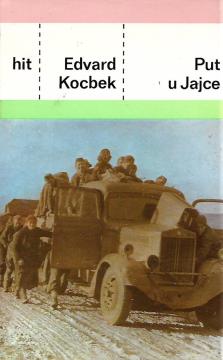
Put u Jajce

Put u Jajce

Edvard Kocbek

In Put u Jajce, Edvard Kocbek provides personal and political testimony about key moments in Yugoslav history. The book is based on Kocbek's memories from the Second World War, especially the trip to Jajce in 1943.

The second session of AVNOJ was held in Jajce in 1943, an event that determined the future of Yugoslavia. Through a reflective and lyrical style, the author shows the tension of the times, political dilemmas and his own internal struggle as a Catholic intellectual in the partisan movement. Kocbek not only documents historical facts, but also deeply questions ideologies, morals and the destiny of the individual in the vortex of great changes. The book is a powerful testimony of the conflict between ideals and reality, pointing to the complexity of history and human decisions.

Titel des Originals
Slovensko poslanstvo: Dnevnik s poti v Jajce 1943
Übersetzung
Ivan Brajdić
Editor
Zlatko Crnković
Illustrationen
Božidar Jakac
Titelseite
Alfred Pal
Maße
19,5 x 12 cm
Seitenzahl
260
Verlag
Znanje, Zagreb, 1978.
 
Latein Schrift. Fester Einband mit Schutzumschlag.
Sprache: Kroatisch.

Angeboten wird ein Exemplar

Zustand:Gebraucht, in ausgezeichnetem Zustand
Zum Warenkorb hinzugefügt!
 

Interessieren Sie sich für ein anderes Buch? Sie können das Angebot über unsere Suchmaschine suchen und finden oder Bücher nach Kategorien durchsuchen.

Diese Titel könnten Sie auch interessieren

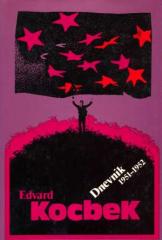
Dnevnik 1951-1952.

Dnevnik 1951-1952.

Edvard Kocbek
Globus, 1987.
Kroatisch. Latein Schrift. Fester Einband mit Schutzumschlag.
4,50
Posljednja nedjelja

Posljednja nedjelja

Milo Dor

The Last Sunday of Mila Dora is a historical novel about the Sarajevo assassination of 1914. Through the investigation of Judge Leo Pfeffer, it depicts the events that led to the assassination and the outbreak of World War I.

Znanje, 1985.
Kroatisch. Latein Schrift. Fester Einband mit Schutzumschlag.
4,22
Zločin

Zločin

Ivan Potrč

Crime (1955) by Ivan Potrč is a historical novella that focuses on the last days of communist illegals Đuro Đaković and Nikola Hećimović, key figures of the Communist Party of Yugoslavia in the period between the two world wars.

Svjetlost, 1982.
Kroatisch. Latein Schrift. Hardcover.
4,28
Kako stoje stvari: Predavanje održano u Domu JNA u Zagrebu 17. 12. 1952.

Kako stoje stvari: Predavanje održano u Domu JNA u Zagrebu 17. 12. 1952.

Miroslav Krleža

In his lecture How Things Are (1952), Krleža discusses the political and cultural situation of post-war Yugoslavia, emphasizing the need for critical thought, cultural renewal, and resistance to dogmatism.

Zora, 1953.
Kroatisch. Latein Schrift. Taschenbuch.
12,48
Programi i manifesti u hrvatskoj književnosti

Programi i manifesti u hrvatskoj književnosti

Miroslav Šicel

The collection "Programs and Manifestos in Croatian Literature", edited by Miroslav Šicel and published by Liber in 1972, represents a key collection of texts that shaped the direction of Croatian literature through various historical phases.

Liber, 1972.
Kroatisch. Latein Schrift. Taschenbuch mit Einband.
6,24
Zaboravite da ste imali kćer

Zaboravite da ste imali kćer

Sandra Gregory, Michael Tierney

Sandra Gregory lived a life in Bangkok that one could only dream of until illness, unemployment and political unrest turned it into a nightmare.

Marjan tisak, 2003.
Kroatisch. Latein Schrift. Taschenbuch.
7,82 - 7,98