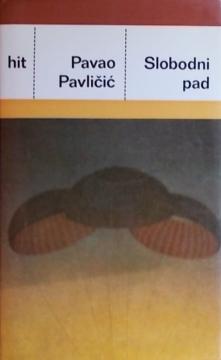
Slobodni pad

Slobodni pad

Pavao Pavličić

Pavličić's novel deals with the psychological and ethical consequences of human choices in extreme circumstances. It is not just a novel about a man in crisis, but also a study of how a person reacts when they lose their support - in themselves, in others

The main character, university professor Viktor, has a car accident and from that situation a series of unusual events begin that force him to reexamine his own life, identity and value system. His everyday world gradually turns into a labyrinth in which the boundaries between the real and the apparent disappear.

The novel begins realistically, but soon develops into a psychological thriller with strong philosophical layers. After the accident, Viktor faces a feeling of loss of control – as if he is in free fall. He meets people who treat him differently than before, and it becomes increasingly clear that those around him begin to perceive him in a way that is alien to him. This change in his perception of the world leads him to reexamine his past actions, personal weaknesses and social role.

Pavličić considers the themes of guilt, responsibility, identity and personal truth through this novel. The author uses elements of tension, but also intellectual introspection, combining an interesting plot with layers of thought. The language is clear and precise, and the narration is linear, although interrupted by reflections and internal monologues.

Editor
Zlatko Crnković
Titelseite
Alfred Pal
Maße
19 x 12 cm
Seitenzahl
247
Verlag
Znanje, Zagreb, 1982.
 
Latein Schrift. Fester Einband mit Schutzumschlag.
Sprache: Kroatisch.

Angeboten wird ein Exemplar

Zustand:Gebraucht, in ausgezeichnetem Zustand
Zum Warenkorb hinzugefügt!
 

Interessieren Sie sich für ein anderes Buch? Sie können das Angebot über unsere Suchmaschine suchen und finden oder Bücher nach Kategorien durchsuchen.

Diese Titel könnten Sie auch interessieren

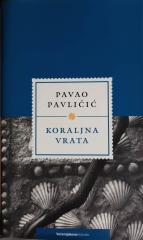
Koraljna vrata

Koraljna vrata

Pavao Pavličić

Wie kann man Gymnasiasten davon überzeugen, Gundulićs Osman zu lesen? Die Frage ist schwierig, aber die Antwort ist einfach. Damit sie Pavličić vor Gundulić lesen.

Večernji list, 2004.
Kroatisch. Latein Schrift. Fester Einband mit Schutzumschlag.
3,26 - 4,78
Eter

Eter

Pavao Pavličić

"Eter" je četvrti roman poznatog hrvatskog književnika Pavla Pavličića u kojem govori o dvojici zagrebačkih novinara koji odlaze u jedan panonski gradić da naprave reportažu o divljim radio stanicama.

Znanje, 1983.
Kroatisch. Latein Schrift. Hardcover.
4,99
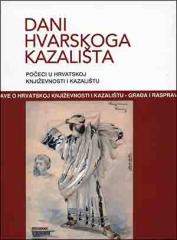
Dani hvarskog kazališta. Počeci u hrvatskoj književnosti i kazalištu

Dani hvarskog kazališta. Počeci u hrvatskoj književnosti i kazalištu

Maja Bošković Stuli, Dunja Fališevac, Milovan Tatarin, Lahorka Plejić Poje, Pavao Pavličić, Helen...
Hrvatska akademija znanosti i umjetnosti (HAZU), 2008.
Kroatisch. Latein Schrift. Taschenbuch.
9,99
Kiti Fojl

Kiti Fojl

Christopher Morley

Roman govori o devojci iz bele kragne koja se zaljubljuje u mladog muškarca iz više klase, uprkos protivljenju njegove porodice.

Svjetlost, 1963.
Kroatisch. Latein Schrift. Taschenbuch.
3,74
Sloboda

Sloboda

Jonathan Franzen

Jonathan Franzen's novel Freedom (2010), an epic family saga of the American middle class, dissects freedom as an illusion in an era of terrorism, environmental crises, and personal compromise. The title ironically mocks the American dream, where choices

V.B.Z, 2011.
Kroatisch. Latein Schrift. Taschenbuch.
18,56
Eugenija Grande

Eugenija Grande

Honore de Balzac

"Eugénie Grandet" (1833), part of Balzac's Human Comedy, is a realistic novel that explores greed, family relationships, and the sacrifices of love in provincial French society.

Svjetlost, 1981.
Kroatisch. Latein Schrift. Hardcover.
3,88