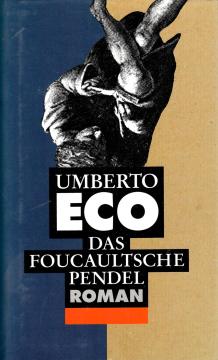
Das Foucaultsche Pendel
Drei gelangweilte Mailänder Redakteure erfinden einen gigantischen Verschwörungsplan, der mit den Templern und okkulten Gesellschaften in Verbindung steht. Das Spiel wird zur tödlichen Realität.
Das Foucaultsche Pendel (1988) ist der zweite Roman von Umberto Eco, ein komplexes postmodernes Werk, das Elemente des historischen Romans, des Thrillers, der satirischen Komödie und der philosophischen Abhandlung vereint. Der Titel bezieht sich auf das Foucaultsche Pendel im Pariser Musée des Arts et Métiers – ein Symbol der Erdrotation und im Roman, gemäß einer fiktiven Verschwörung, das Zentrum kosmischer Macht.
Die Handlung folgt drei Lektoren des Mailänder Verlags Garamond/Manutius: Jacopo Belbo, Diotallevi und dem Erzähler Casaubon. Umgeben von Manuskripten obskurer, okkult veranlagter Autoren (den sogenannten Diabolici) schmieden sie aus Langeweile und intellektuellem Spiel „Den Plan“ – eine gigantische Meta-Verschwörung, die die Tempelritter (nach ihrer Auflösung 1307), die Rosenkreuzer, die Freimaurer, die Kabbala, Umbanda-Rituale und andere Geheimbünde zu einem einzigen Plan zur Weltherrschaft verbindet, basierend auf tellurischen Strömen. Mithilfe des Abulafia-Computers kombinieren sie wahllos historische Fakten, Legenden und Pseudowissenschaft zu einer kohärenten, aber rein fiktiven Erzählung.
Was als intellektueller Scherz und Parodie auf Verschwörungstheorien beginnt, wird bald zur gefährlichen Realität. Menschen, die mit dem Plan in Verbindung stehen, verschwinden oder werden ermordet, und echte Okkultisten und Fanatiker glauben an dessen Konstruktion und versuchen, sie umzusetzen. Der Roman untersucht die Gefahr einer semiotischen „Überinterpretation“ der Welt – den Glauben, dass hinter jedem Zufall eine verborgene Bedeutung steckt. Eco zeigt meisterhaft, wie Fiktion die Realität formen kann und wie das Streben nach Sinn zu Paranoia, Gewalt und Identitätsverlust führen kann.
Die Struktur des Romans ist komplex: Die Geschichte entfaltet sich in mehreren Zeitebenen, angereichert mit Rückblenden, Zitaten und Anspielungen auf Geschichte, Philosophie, Semiotik und Literatur. Eco spielt mit dem Leser – das Buch ist gleichzeitig unterhaltsam, spannend und tiefgründig ironisch. Die Satire richtet sich gegen Verschwörungstheorien, Pseudowissenschaft und intellektuellen Snobismus, aber auch gegen das postmoderne Bedeutungsspiel selbst.
„Das Foucaultsche Pendel“ gilt als eines von Ecos ambitioniertesten Werken – gelehrt, anspruchsvoll und intellektuell anregend. Viele vergleichen es mit „Der Name der Rose“, doch hier liegt der Schwerpunkt stärker auf der Moderne, der Ironie und der Kritik an einer von Geheimnissen besessenen Gesellschaft. Der Roman warnt: „Wer zu sehr nach dem verborgenen Plan der Geschichte sucht, riskiert, ihn selbst zu erschaffen – mit tragischen Folgen.“ Ein Klassiker der zeitgenössischen Weltliteratur, der den geduldigen Leser mit einer Fülle von Ideen und erzählerischer Virtuosität belohnt.
Angeboten wird ein Exemplar