Maskarada / Bračna ljubav

Maskarada / Bračna ljubav

Alberto Moravia

In "Masquerade," Moravia satirically depicts fascist Italy through absurd political intrigue and disguise. "Marital Love" intimately explores erotic tension, possessiveness, and emotional alienation in everyday life.

In these two works, Alberto Moravia shows different registers of his creativity – political satire and deep psychological analysis of intimate relationships.

Masquerade (1941) is a satirical, grotesque novel set in fascist Italy. The main character is a police informant who is assigned to seduce and entrap a young woman whose husband is politically undesirable. The plot takes place in an atmosphere of masquerades, lies, disguises and the absurdity of a totalitarian regime. Moravia mercilessly mocks the bureaucracy, corruption, hypocrisy and dehumanization brought about by fascism. At the time of its publication, the novel was banned and confiscated by Mussolini's regime due to harsh criticism.

Marital Love (1949) is a more subtle, intimate prose – a collection of stories or a short novel focused on a married couple. The wife is a beautiful, sensual woman who becomes the object of her husband's obsessive desire and jealousy. He is an intellectual who is simultaneously attracted to and threatened by her physicality and independence. The work dissects erotic dynamics, possessiveness, fear of loss, feelings of guilt and the impossibility of completely possessing another. Here Moravia demonstrates mastery in depicting subtle psychological nuances – from passion to coldness, from tenderness to destructive control. The marital relationship becomes a battlefield of identity, power and desire.

Both texts are characterized by Moravia's typical theme – a man trapped in false roles (social or intimate), the impossibility of authentic communication and the constant struggle between appearance and essence. "Masquerade" is sharper, politically engaged, while "Marital Love" goes deeper into the erotic-psychological sphere. Together they show the breadth of Moravia's oeuvre – from social criticism to the most intimate corners of the human soul.

Naslov izvornika
La Mascherata / L'amore coniugale
Prijevod
Jugana Stojanović
Dimenzije
20 x 13 cm
Broj strana
333
Nakladnik
Otokar Keršovani, Rijeka, 1966.
 
Latinica. Tvrde korice.
Jezik: Srpski.

Dva primjerka su u ponudi

Primjerak broj 1

Stanje:Nekorišteno
Dodano u košaricu!

Primjerak broj 2

Stanje:Korišteno, u odličnom stanju
Dodano u košaricu!
 

Zanima Vas i neka druga knjiga? Možete pretražiti našu ponudu pomoću tražilice ili prelistati knjige po kategorijama.

Možda će Vas zanimati i ovi naslovi

Čovek koji gleda

Čovek koji gleda

Alberto Moravia
Minerva, 1988.
Srpski. Latinica. Tvrde korice s ovitkom.
6,63
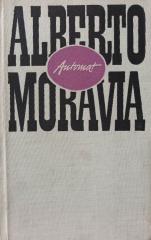
Automat

Automat

Alberto Moravia
Otokar Keršovani, 1966.
Hrvatski. Latinica. Tvrde korice.
3,99
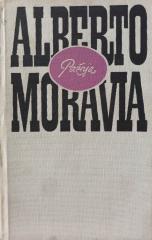
Pažnja

Pažnja

Alberto Moravia
Otokar Keršovani, 1966.
Hrvatski. Latinica. Tvrde korice.
3,99
Nikome nema povratka

Nikome nema povratka

Alba de Céspedes

No Return (1938) follows the lives of eight young women in a Roman student dormitory, their loves, ambitions, and fates in Italian society before World War II, showing that the past cannot be returned or escaped from itself.

Nakladni zavod Ante Velzek, 1941.
Hrvatski. Latinica. Tvrde korice.
Knjiga se sastoji od dva toma
12,42
Srce

Srce

Edmondo de Amicis

"Heart" by Edmond de Amicis is a classic Italian educational book with touching stories about friendship, courage and humanity. Special, fourth edition, with the dedication "A gift to our children by Petar Kuničić".

St. Kugli, 1902.
Hrvatski. Latinica. Tvrde korice.
36,42
Božanstvena komedija: Raj

Božanstvena komedija: Raj

Dante Alighieri

Paradiso is the third and final part of Dante's masterpiece, in which the poet, guided by Beatrice, travels through the nine celestial spheres towards the Empyre and the vision of God, meeting blessed souls and contemplating theological truths.

Matica hrvatska, 1915.
Hrvatski. Latinica. Broširano.
23,46