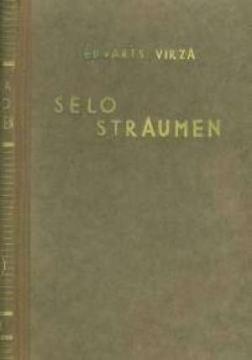
Selo Straumen: kronika lotiškog imanja
In seinem Roman „Straumen Village“ schildert Edvarts Virza das idealisierte Leben eines lettischen Dorfes im Kreislauf der Jahreszeiten und betont dabei das Gemeinschaftsgefühl, die Tradition und die Harmonie des Menschen mit der Natur.
Edvarts Virza schuf mit seinem Werk Das Dorf Straumen (1933) eines der bekanntesten Werke der lettischen Literatur der Zwischenkriegszeit, das als poetische Chronik eines idealisierten Landlebens verstanden werden kann.
Für Leser, die mit der lettischen Literaturtradition nicht vertraut sind, ist es wichtig zu betonen, dass Straumēni kein klassischer Roman mit einem einzigen Protagonisten und einer klaren Handlung ist, sondern eine lyrisch-epische Schilderung einer ländlichen Gemeinschaft. Das Werk wird oft als ländliches Epos bezeichnet, da der Fokus nicht auf dem Individuum, sondern auf dem Kollektiv liegt – der Familie und den Bauern, die im Einklang mit den natürlichen Zyklen leben.
Die Handlung ist um den Wechsel der Jahreszeiten herum organisiert, der den Lebensrhythmus bestimmt: Der Frühling bringt den Beginn der Arbeit und Erneuerung, der Sommer einen intensiven landwirtschaftlichen Zyklus, der Herbst die Ernte und ein Gefühl der Erfüllung, und der Winter den Rückzug in den geschützten Familienraum und die Besinnung. Dies nährt die Vorstellung einer stabilen, beinahe archetypischen Ordnung, in der Mensch, Land und Tradition miteinander verbunden sind.
Im breiteren kulturellen Kontext entstand das Werk in einer Zeit, in der die lettische Literatur die nationale Identität und ländliche Werte stark betonte und das Dorf oft als Träger moralischer und kultureller Stabilität idealisierte. Straumen Village wird daher nicht nur als Schilderung des ländlichen Lebens gelesen, sondern auch als symbolische Konstruktion nationalen Raums und kollektiven Gedächtnisses.
Stilistisch verwendet Virza eine hochstilisierte, reiche und rhythmische, poetisch anmutende Sprache, die den alltäglichen Dorfarbeiten eine monumentale, fast mythische Dimension verleiht. Es ist diese Verbindung von Detailrealismus und Idealisierung, die das Werk zu einem der kanonischen Texte der lettischen Literatur des 20. Jahrhunderts macht.
Angeboten wird ein Exemplar
- Spuren von Patina