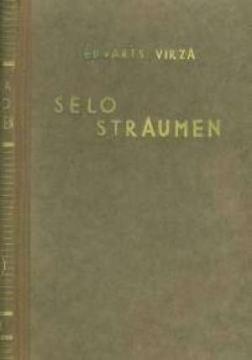
Selo Straumen: kronika lotiškog imanja
Antikvitet

Selo Straumen: kronika lotiškog imanja

Edvarts Virza

In the novel Straumen Village, Edvarts Virza depicts the idealized life of a Latvian village through the cycle of the seasons, emphasizing the collective, tradition, and harmony of man with nature.

Edvarts Virza in his work The Village of Straumen (1933) creates one of the most recognizable works of Latvian interwar literature, which can be understood as a poetic chronicle of idealized rural life.

For the reader unfamiliar with the Latvian literary tradition, it is important to emphasize that Straumēni does not function as a classic novel with a single protagonist and a clear plot line, but as a lyrical-epic depiction of a rural community. The work is often described as a rural epic, because the focus is not on the individual but on the collective – the family and the peasants living in harmony with natural cycles.

The plot is organized around the change of seasons, which determines the rhythm of life: spring brings the beginning of work and renewal, summer an intensive agricultural cycle, autumn the harvest and a sense of fulfillment, and winter a retreat into an enclosed, family space and reflection. This builds the idea of ​​a stable, almost archetypal order in which man, land and tradition are interconnected.

In a broader cultural context, the work was created in a period when Latvian literature strongly affirmed national identity and rural values, often idealizing the village as a bearer of moral and cultural stability. Straumen Village is therefore read not only as a depiction of rural life, but also as a symbolic construction of national space and collective memory.

Stylistically, Virza uses highly stylized, rich and rhythmic language, close to poetry, which gives everyday village chores a monumental, almost mythical dimension. It is this combination of realism of details and idealization that makes the work one of the canonical texts of 20th-century Latvian literature.

Naslov izvornika
Straumēni
Prijevod
Ivan Esih
Dimenzije
18 x 13 cm
Broj strana
212
Nakladnik
Suvremena biblioteka, Zagreb, 1943.
 
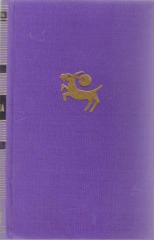
Latinica. Tvrde korice.
Jezik: Hrvatski.

Jedan primjerak je u ponudi

Stanje:Korišteno, u vrlo dobrom stanju
Oštećenja / nepogodnosti:
  • Traces of patina
Dodano u košaricu!
 

Zanima Vas i neka druga knjiga? Možete pretražiti našu ponudu pomoću tražilice ili prelistati knjige po kategorijama.

Možda će Vas zanimati i ovi naslovi

Mirisni vrt šeika Nefzavija

Mirisni vrt šeika Nefzavija

Muḥammad Ibn Muḥammad Al-Nafzawī

A classic 15th-century erotic manual, written by Sheikh Nefzawi at the request of the Sultan of Tunisia. Similar to the Hindu Kama Sutra, it presents an Islamic view of sexuality within marriage, emphasizing harmony and pleasure for partners.

SKD Prosvjeta, 1972.
Hrvatski. Latinica. Broširano.
7,325,49
Rastavljena

Rastavljena

Pierre Mauriac

A spiritual novel about a woman who is separating from her husband, dealing with the consequences of divorce, and searching for meaning through faith, suffering, and a Christian understanding of marriage and family.

Hrvatsko književno društvo Sv. Jeronima, 1933.
Hrvatski. Latinica. Tvrde korice.
8,26
Hrvatska uvijek katolička

Hrvatska uvijek katolička

Juraj Kocijančić

Croatia Always Catholic (1940), a popular-historical and apologetic book by a Samobor parish priest that proves the thousand-year Catholic loyalty of the Croatian people, from the time of their immigration until the 20th century.

Hrvatsko književno društvo Sv. Jeronima, 1940.
Hrvatski. Latinica. Broširano.
11,26
Srce

Srce

Edmondo de Amicis

"Heart" by Edmond de Amicis is a classic Italian educational book with touching stories about friendship, courage and humanity. Special, fourth edition, with the dedication "A gift to our children by Petar Kuničić".

St. Kugli, 1902.
Hrvatski. Latinica. Tvrde korice.
36,42
Petar II. Petrović Njeguš: studija

Petar II. Petrović Njeguš: studija

Abdullatif Dizdarević

An interwar study of Petar II Petrović Njegoš on the occasion of the 80th anniversary of his death: biography, selection of verses and interpretation of key works in a historical-political framework.

BE-KA, 1934.
Hrvatski. Latinica. Broširano.
8,24
Qui judicatis

Qui judicatis

Aleksandar Pavlović

A psychological-moral novel about a representative of the so-called lost generation, the generation that came of age during World War I, faced with post-war disappointment, moral crises, and the question of justice in society.

Novinska štamparija S. Pintarić, 1927.
Hrvatski. Latinica. Broširano.
7,36