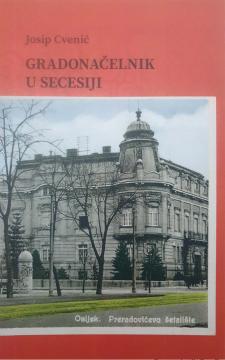
Gradonačelnik u secesiji

Gradonačelnik u secesiji

Josip Cvenić

In his latest novel, the author thematizes the time of Vjekoslav Hengl's mayoralty, from 1920 to 1934. It was a turbulent socio-political period, both for the city of Osijek and for the wider geopolitical space to which it belonged.

In a way, political and personal crises in the novel push Hengl forward, into a stubborn representation of city and national interests, only the occasional concession necessary for the functioning of the city, but, perhaps most significantly, also into the economic and infrastructural rise of the city on the Drava. Cvenić's writing, just like the previous novel, was partly inspired by the exhibition set up in the City and University Library in Osijek, today located in the very building where the Hengls lived, called "What Thildy and Vjekoslav Hengl were thinking", giving the author an insight into more documentary and photographic material, just like the one he researched in the State Archives in Osijek, the Museum of Slavonia, but also the sources from which he collected precious pieces of the cultural puzzle from which he drew, transferring historiographical data, personal reflections on time and space, man's role in his own and other people's lives, in the art of words.

Editor
Tatjana Ileš
Maße
20 x 13 cm
Seitenzahl
212
Verlag
Matica hrvatska, Osijek, 2022.
 
Latein Schrift. Taschenbuch.
Sprache: Kroatisch.
ISBN
978-9-53242-147-7

Es werden zwei Exemplare angeboten

Kopiennummer 1

Zustand:Ungebraucht
Nachteile/Unannehmlichkeiten:
  • A message of a personal nature
Zum Warenkorb hinzugefügt!

Kopiennummer 2

Zustand:Gebraucht, in ausgezeichnetem Zustand
Die Besonderheit dieses Exemplars:
Unterschrift des Autors
Widmung
Zum Warenkorb hinzugefügt!
 

Interessieren Sie sich für ein anderes Buch? Sie können das Angebot über unsere Suchmaschine suchen und finden oder Bücher nach Kategorien durchsuchen.

Diese Titel könnten Sie auch interessieren

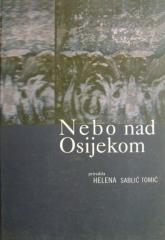
Nebo nad Osijekom: intimistički zapisi

Nebo nad Osijekom: intimistički zapisi

Stanko Andrić, Ljerka Antonić, Wolfgang Bahr, Josip Cvenić, Branko Čegec, Nedjeljko Fabrio, Aleks...

The monograph Sky over Osijek is intended as a collection of intimate writings about the city on the Drava River, Osijek. The authors of the published texts are mostly writers who live in Osijek or have once passed through Osijek and then often visit it.

Matica hrvatska, 2003.
Kroatisch. Latein Schrift. Hardcover.
14,52
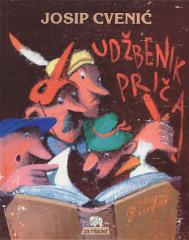
Udžbenik priča za završne razrede odrastanja

Udžbenik priča za završne razrede odrastanja

Josip Cvenić

Fairy tales are not rivers of the abyss, so at some time and in some country they don't exist, and then they appear again. No, they are everywhere and always present rivers of stories.

Slon, 1995.
Kroatisch. Latein Schrift. Taschenbuch.
3,32
Hrvatske pravice

Hrvatske pravice

Petar Požar

"Croatian Rights" presents a selection of key historical documents that shape the Croatian legal tradition – from medieval charters to modern acts – emphasizing the continuity of Croatian autonomy within the broader European framework.

Vlastita naklada, 1990.
Kroatisch. Latein Schrift. Hardcover.
5,31
Osječka groblja

Osječka groblja

Stjepan Sršan

The book is deeply rooted in the local history and culture of Osijek, with an emphasis on cemetery motifs that serve as a metaphor for memory, death, and disappearance.

Povijesni arhiv u Osijeku, 1996.
Kroatisch. Latein Schrift. Taschenbuch.
5,26
Anđelko Mijatović: Bleiburška tragedija i križni put hrvatskoga naroda godine 1945.

Anđelko Mijatović: Bleiburška tragedija i križni put hrvatskoga naroda godine 1945.

Anđelko Mijatović

The Bleiburg Tragedy and the Way of the Cross of the Croatian People in 1945 is a historical-documentary work by Croatian historian and university professor Anđelko Mijatović.

HSK, 2007.
Kroatisch. Latein Schrift. Taschenbuch.
6,62
U modi: Kultura odijevanja porečkih plemenitih građana (1650.-1720.)

U modi: Kultura odijevanja porečkih plemenitih građana (1650.-1720.)

Elena Uljančić

The book represents a novelty not only in Istrian, but also in Croatian historiography. Namely, the clothing culture in the region of Istria in the early modern period has not yet been analyzed at all, and for the region of Dalmatia only sporadically.

Srednja Europa, 2019.
Kroatisch. Latein Schrift. Hardcover.
16,99