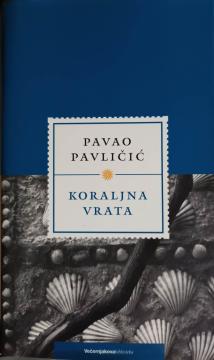
Koraljna vrata

Koraljna vrata

Pavao Pavličić

How to persuade high school students to read Gundulić's Osman? The question is difficult, but the answer is simple. So that they read Pavličić before Gundulić.

The novel Koraljna vrata (first published in 1990) encourages a look in the literary-historical rear-view mirror. With this novel, the baroque epic is sewn into contemporary Croatian literature. Pavličić's 13th novel in a row is written in 20 chapters. Gundulić's Osman was sung in 20 cantos. The novel Koraljna vrata begins with the moment when the philologist Krsto Brodnjak, at the age of 33 (!), and in search of undiscovered manuscripts of older Croatian literature, arrives on the island of Lastovo. The discovery of the lost parts of Osman is connected with the disruption of the relationship between good and evil.

The reader is drawn into the story as if he himself, like Brodnjak, fell into the emptiness of the epic. And that is the most that a writer can achieve with his text.

The novel was written in the summer of 1989, the year of the great anniversary of Ivan Gundulić (1589 – 1638). In the same year, Pavao Pavličić gave a lecture entitled The Letters of Osman at the Gundulić Conference. This text, and how useful it is for interpreting and evaluating the novel, is being published for the first time with Koraljna vrata.

Editor
Branka Primorac, Seid Serdarević
Illustrationen
Stanko Abadžić
Titelseite
Vanja Cuculić
Maße
21 x 13 cm
Seitenzahl
215
Verlag
Večernji list, Zagreb, 2004.
 
Latein Schrift. Fester Einband mit Schutzumschlag.
Sprache: Kroatisch.
ISBN
9-53-716102-1

Weitere Exemplare sind verfügbar
Kopiennummer 1

Zustand:Ungebraucht
Zum Warenkorb hinzugefügt!

Kopiennummer 2

Zustand:Gebraucht, in ausgezeichnetem Zustand
Zum Warenkorb hinzugefügt!

Kopiennummer 3

Zustand:Gebraucht, in ausgezeichnetem Zustand
Zum Warenkorb hinzugefügt!
 

Interessieren Sie sich für ein anderes Buch? Sie können das Angebot über unsere Suchmaschine suchen und finden oder Bücher nach Kategorien durchsuchen.

Diese Titel könnten Sie auch interessieren

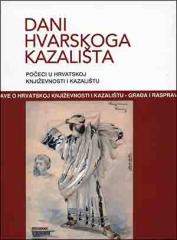
Dani hvarskog kazališta. Počeci u hrvatskoj književnosti i kazalištu

Dani hvarskog kazališta. Počeci u hrvatskoj književnosti i kazalištu

Maja Bošković Stuli, Dunja Fališevac, Milovan Tatarin, Lahorka Plejić Poje, Pavao Pavličić, Helen...
Hrvatska akademija znanosti i umjetnosti (HAZU), 2008.
Kroatisch. Latein Schrift. Taschenbuch.
9,99
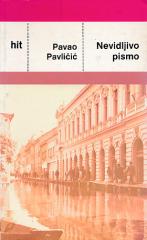
Nevidljivo pismo

Nevidljivo pismo

Pavao Pavličić

The Invisible Letter by Pavle Pavličić is a crime novel in which a mysterious letter written in invisible ink triggers an investigation that leads to forgotten events, hidden motives, and a crime.

Znanje, 1993.
Kroatisch. Latein Schrift. Fester Einband mit Schutzumschlag.
5,99
Začuđeni svatovi

Začuđeni svatovi

Eugen Kumičić

The novel "The Surprised Wedding Party" tells the story of the unrequited love of Antonio, a poor young man, for the beautiful daughter of a fisherman, Marija. Along with the aforementioned love story, another plot stands out, and that is the secret love

Školska knjiga, 1982.
Kroatisch. Latein Schrift. Taschenbuch.
Das Buch besteht aus zwei Bänden
2,00 - 5,64
Zagrepčanka

Zagrepčanka

Branislav Glumac

Branislav Glumac published a novel without periods or commas in 1974, as the relentless stream of thought of a young rebel. Published in socialist Yugoslavia, the work caused a scandal with its openness and became a classic about generational rebellion.

IROS, 1986.
Kroatisch. Latein Schrift. Hardcover.
8,24
Proces

Proces

Franz Kafka

Kafka wrote The Process between 1914 and 1915, published posthumously in 1925. The novel is unfinished but with an added final chapter by Max Brod. Edition with a foreword by B. Živojinović and an afterword by Walter Killi.

BIGZ, 1990.
Serbisch. Latein Schrift. Taschenbuch.
4,26
Glad na ledini

Glad na ledini

Agustin Stipčević
Zora, 1968.
Kroatisch. Latein Schrift. Fester Einband mit Schutzumschlag.
5,22