
Selo Stepančikovo

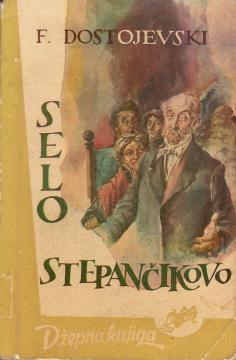
Selo Stepančikovo

Fjodor Mihajlovič Dostojevski

"The Village of Stepanchikovo" is a humorous novel by Dostoyevsky, first published in 1859. This novel, which differs from the later, darker works of the author, is a satirical critique of social relations and human weaknesses.

The story is set in the small village of Stepanchikovo, where Colonel Yegor Ilyich Rostanyev manages his estate. After the death of his parents, he finds himself under the strong influence of Foma Fomič Opiskin, a flatterer and manipulator, who uses his intelligence and rhetorical skills to gain power over his household and neighbors.

Rostanjev is a good and noble man, but also weak when it comes to conflicts. Foma Fomič, on the other hand, keeps the entire household under his control, manipulating all the inhabitants of the estate, including Rostanje's despotic mother, servants and guests.

The story gets complicated when Rostanyev invites his nephew, the young intellectual Sergei Alexandrovich, to visit him. Sergei comes with the intention of helping his uncle, but soon finds himself in the vortex of Foma's intrigues. The situation is further complicated because Rostanjev wants to marry a modest girl Nastasja, which Foma opposes, under the pretext of preserving "moral order".

Although "The Village of Stepanchikovo" is less well-known than Dostoevsky's later works, it offers an interesting insight into the author's early ideas about human nature and society. Combining humor and psychological analysis, the novel is a humorous but also a deep story about human weaknesses and interpersonal relationships.

Titel des Originals
Село Степанчиково и его обитатели
Übersetzung
Milan Kašanin
Editor
Risto Trifković
Titelseite
Mirko Stojnić
Maße
16,5 x 11 cm
Seitenzahl
228
Verlag
Svjetlost, Sarajevo, 1962.
 
Latein Schrift. Taschenbuch.
Sprache: Serbisch.

Es werden zwei Exemplare angeboten

Kopiennummer 1

Zustand:Gebraucht, in ausgezeichnetem Zustand
Nachteile/Unannehmlichkeiten:
  • Slight damage to the cover
Zum Warenkorb hinzugefügt!

Kopiennummer 2

Zustand:Gebraucht, in ausgezeichnetem Zustand
Zum Warenkorb hinzugefügt!
 

Interessieren Sie sich für ein anderes Buch? Sie können das Angebot über unsere Suchmaschine suchen und finden oder Bücher nach Kategorien durchsuchen.

Diese Titel könnten Sie auch interessieren

Braća Karamazovi

Braća Karamazovi

Fjodor M. Dostojevski

The Brothers Karamazov is the last novel of the Russian genius Fyodor Mikhailovich Dostoyevsky, which he completed less than three months before his death.

Globus, 2004.
Kroatisch. Latein Schrift. Hardcover.
12,36 - 16,2412,99
Zločin i kazna

Zločin i kazna

Fjodor Mihajlovič Dostojevski

Crime and Punishment is a novel by Russian writer Fyodor Mikhailovich Dostoevsky, published in 1866 in the journal Russian Herald. It is considered one of the greatest works of Russian literature. The plot is set in Saint Petersburg in the mid-1860s.

Rad, 1988.
Serbisch. Latein Schrift. Hardcover.
7,605,70
Ujakov san / Poniženi i uvrijeđeni

Ujakov san / Poniženi i uvrijeđeni

Fjodor Mihajlovič Dostojevski

Both works reflect Dostoevsky's early phase, with a focus on social criticism, psychological analysis and moral dilemmas, foreshadowing the themes of his later masterpieces.

Znanje, 1982.
Kroatisch. Latein Schrift. Hardcover.
11,48 - 13,26
Olga Org: Roman iz ruskoga života

Olga Org: Roman iz ruskoga života

Jurij Slezkin

Yuri Slezkin's novel Olga Org, published in 1914, is one of the most significant works of Russian pre-revolutionary literature. The work has gone through more than ten editions and has been adapted for the theater, which testifies to its popularity and in

Naklada kraljevske zemaljske tiskare, 1923.
Kroatisch. Latein Schrift. Hardcover.
7,32
Sabrana djela A. P. Čehova #4: Dan izvan grada

Sabrana djela A. P. Čehova #4: Dan izvan grada

Anton Pavlovič Čehov

The fourth volume of Chekhov's works contains novellas and humoresques, which were mostly written in 1886. Still writing for a fee in daily newspapers, Chekhov often had to subordinate his art to comprehensibility and cheap humor due to the taste of the r

Zora, 1959.
Kroatisch. Latein Schrift. Fester Einband mit Schutzumschlag.
9,56
Džingis-kan

Džingis-kan

Vasilij Jan

Vasily Yan's novel Genghis Khan depicts the rise of the Mongol leader Temujin, from childhood in the steppes to the creation of the largest empire in the world, highlighting his courage, cruelty, and relentless will to power.

Rad, 1988.
Serbisch. Latein Schrift. Hardcover.
9,78