Mrtve duše

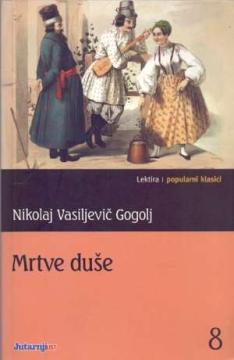
Mrtve duše

Nikolaj Vasiljevič Gogolj

Dead Souls (1842) is a brilliant satire that exposes the moral and social rot of imperial Russia through Chichikov's fraud with dead serfs, with Gogol's virtuoso mix of humor, irony and lyricism.

The novel Dead Souls is a satirical masterpiece of Russian literature that criticizes the social and moral deviations of Tsarist Russia. The main character, Chichikov, a charming swindler, travels through the provinces buying up "dead souls" - the names of deceased serfs who are still on the landowners' lists, for which taxes are paid. His plan is to use these souls as collateral to obtain loans and become rich.

The plot follows Chichikov as he negotiates with various landowners, from the stingy Korobochka to the wasteful Nozdryov and the melancholic Plyushkin. Each character reveals different characters and weaknesses of Russian society - greed, vanity, stupidity and moral decline. Gogol masterfully uses humor and irony, creating grotesque portraits that depict corruption and spiritual emptiness. Chichikov's seemingly meaningless enterprise becomes a metaphor for the trade in nothingness in a society devoid of values.

The novel, conceived as a trilogy modeled after Dante's Divine Comedy, remained unfinished. The first part, the only one published, ends with Chichikov's escape after his deception is discovered. Gogol's style combines realism, satire, and lyrical digressions, such as the famous passage about Russia as a troika rushing into the unknown.

Titel des Originals
Mertvye duši
Übersetzung
Zlatko Crnković
Titelseite
Halid Malla
Maße
19,5 x 12,8 cm
Seitenzahl
319
Verlag
Jutarnji list, Zagreb, 2004.
 
Latein Schrift. Taschenbuch.
Sprache: Kroatisch.
ISBN
9-53-716039-4

Angeboten wird ein Exemplar

Zustand:Gebraucht, in sehr gutem Zustand
Zum Warenkorb hinzugefügt!
 

Interessieren Sie sich für ein anderes Buch? Sie können das Angebot über unsere Suchmaschine suchen und finden oder Bücher nach Kategorien durchsuchen.

Diese Titel könnten Sie auch interessieren

Taras Buljba

Taras Buljba

Nikolaj Vasiljevič Gogolj
Veselin Masleša, 1985.
Kroatisch. Latein Schrift. Hardcover.
2,99 - 3,12
Taras Buljba

Taras Buljba

Nikolaj Vasiljevič Gogolj
Svjetlost, 1961.
Kroatisch. Latein Schrift. Taschenbuch.
3,98
Rosa

Rosa

Heike Geißler

With the brilliant debut of Heike Geißler, she conquered the German audience. With a novel about a girl who leaves her newborn baby because she feels she is losing control over her own life and desires, the author tells the story of a generation of lost p

Fraktura, 2006.
Kroatisch. Latein Schrift. Taschenbuch.
5,74
„Dosje“ i druge priče

„Dosje“ i druge priče

Nikola Đuretić

If we know how to listen, it will whisper to us how complicated life is. No other recommendations are needed for this prose by Đuretić.

Društvo hrvatskih književnika, 2024.
Kroatisch. Latein Schrift. Taschenbuch.
7,96
Poslednji živi mrtvac

Poslednji živi mrtvac

Branislav Glumac
Zora, 1965.
Kroatisch. Latein Schrift. Fester Einband mit Schutzumschlag.
0,99
Nana

Nana

Émile Zola

The novel "Nana" by Emil Zola is a story about false love, about feigned passion and lust, greed and all emotions related to possessing material things. Everything is embodied in the figure of a woman, possessed of all the vices that society condemns.

Minerva, 1984.
Serbisch. Latein Schrift. Fester Einband mit Schutzumschlag.
4,88 - 4,96