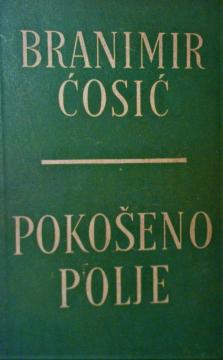
Pokošeno polje
„Pokošeno polje“ je najznačajniji i poslednji roman srpskog pisca Branimira Ćosića (1903–1934), završen 1933. godine, samo pet meseci pre njegove smrti od tuberkuloze u 31. godini života.
Roman je podeljen na dva dela: prvi je autobiografski prikaz ratom razorenog detinjstva i porodice glavnog junaka (Ćosićeva sopstvena sudbina iz Prvog svetskog rata), drugi prikazuje moralni i društveni slom posleratne Jugoslavije, korupciju, egzistencijalnu krizu i besmislenost života. Tragičan, introspektivni portret generacije slomljene ratom i vremenima krize.
Branimir Ćosić, rođen u selu Štitar kod Šapca, studirao je filozofiju i pravo u Beogradu, radio je kao novinar i književni kritičar (Politika, Vreme), pripada generaciji srpskih pisaca između dva rata – realističko-ekspresionističkoj, sa elementima društvene kritike i egzistencijalne melanholije. Umro je mlad od tuberkuloze, ostavljajući za sobom ograničen opus: romane Vrzino kolo (1927), Mrtvi se vraćaju (1930), zbirke priča i eseja, ali se Pokosena polja smatraju njegovim vrhuncem i najzrelijim delom.
Roman je prvi put objavljen 1933. godine kod Gece Kona. Sastoji se iz dva dela:
- Prvi deo - autobiografski, lirski i intimni: prikazuje detinjstvo i mladost glavnog junaka (jasno piščevog alter ega) u vihoru Prvog svetskog rata - glad, beda, gubitak porodice, uništeno selo, moralni šok. Ovo je „pokošeno polje“ života – metafora za uništenu mladost i generaciju.
- Drugi deo – širi društveni roman: junak u posleratnom Beogradu suočava se sa korupcijom, birokratijom, lažnom inteligencijom, egzistencijalnom prazninom, nemogućnošću ljubavi i smisla. Likovi su tipični za međuratnu književnost: propali intelektualci, cinici, oportunisti. Stil je psihološki dubok, sa introspekcijom, fragmentarnim pripovedanjem i oštrim društvenim zapažanjima.
Delo je kritika posleratne Jugoslavije - dekadencija, gubitak ideala, besmislenost - slično motivima Crnjanskog (Seobe), Andrića ili Kočića, ali sa jačim autobiografskim i intimnim tonom. Naslov simbolizuje uništenu generaciju, „pokošenu“ ratom i vremenom.
Angeboten wird ein Exemplar
- Tragovi patine