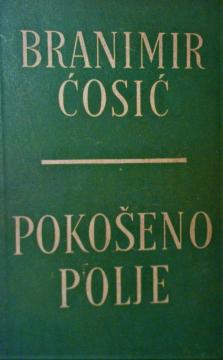
Pokošeno polje

Pokošeno polje

Branimir Ćosić

Mowed Field is the most significant and last novel by the Serbian writer Branimir Ćosić (1903–1934), completed in 1933, just five months before his death from tuberculosis at the age of 31.

The novel is divided into two parts: the first is an autobiographical account of the war-torn childhood and family of the protagonist (Ćosić's own fate from World War I), the second depicts the moral and social collapse of post-war Yugoslavia, corruption, existential crisis and the meaninglessness of life. A tragic, introspective portrait of a generation broken by war and times of crisis.

Branimir Ćosić, born in the village of Štitar near Šabac, studied philosophy and law in Belgrade, worked as a journalist and literary critic (Politika, Vreme), belongs to the generation of Serbian writers between the two wars – realist-expressionist, with elements of social criticism and existential melancholy. He died young of tuberculosis, leaving behind a limited oeuvre: the novels Vrzino kolo (1927), Mrtvi se vraćaju (1930), collections of stories and essays, but Pokosena polja is considered his peak and most mature work.

The novel was first published in 1933 by Geca Kon. It consists of two parts:

  • The first part - autobiographical, lyrical and intimate: shows the childhood and youth of the main character (clearly the writer's alter ego) in the whirlwind of the First World War - hunger, misery, loss of family, village destroyed, moral shock. This is the "mown field" of life – a metaphor for a ruined youth and generation.
  • The second part – a broader social novel: the hero in post-war Belgrade faces corruption, bureaucracy, false intelligence, existential emptiness, the impossibility of love and meaning. The characters are typical of interwar literature: failed intellectuals, cynics, opportunists. The style is psychologically deep, with introspection, fragmentary storytelling and sharp social observations.

The work is a critique of post-war Yugoslavia - decadence, loss of ideals, meaninglessness - similar to the motifs of Crnjanski (Migration), Andrić or Kočić, but with a stronger autobiographical and intimate tone. The title symbolizes a destroyed generation, "mown down" by war and time.

Urednik
Marijan Matković
Dimenzije
20 x 14 cm
Broj strana
498
Nakladnik
Nakladni zavod Hrvatske, Zagreb, 1949.
 
Latinica. Tvrde korice.
Jezik: Srpski.

Jedan primjerak je u ponudi

Stanje:Korišteno, u vrlo dobrom stanju
Oštećenja / nepogodnosti:
  • Traces of patina
Dodano u košaricu!
 

Zanima Vas i neka druga knjiga? Možete pretražiti našu ponudu pomoću tražilice ili prelistati knjige po kategorijama.

Možda će Vas zanimati i ovi naslovi

Pokošeno polje

Pokošeno polje

Branimir Ćosić

Mown Fields (1933) represents the culmination and swan song of a life that ended too soon – the author finished the novel just five months before his death from tuberculosis, at the age of thirty-one.

Svjetlost, 1961.
Srpski. Latinica. Tvrde korice.
Knjiga se sastoji od dva toma
5,34
Istok i Zapad

Istok i Zapad

Gerald Green

In East and West (1986), Green weaves an epic tale of love and war, intertwining the lives of ordinary people with great historical events. The novel is a powerful fresco of war, but also of an indestructible spirit seeking light amidst darkness.

August Cesarec, 1990.
Hrvatski. Latinica. Broširano.
Knjiga se sastoji od dva toma
7,42
Mila 18

Mila 18

Leon Uris

Mila 18 is a novel about the legendary uprising in the Warsaw ghetto. To write the novel, Uris spent years studying archival materials, visiting the places where the events took place and talking to survivors of the ghetto...

Matica hrvatska, 1970.
Hrvatski. Latinica. Tvrde korice s ovitkom.
7,245,79
Iskra života

Iskra života

Erich Maria Remarque

Spark of Life follows a group of inmates in a Nazi concentration camp who, despite the constant terror, retain their moral strength and humanity. The novel depicts the struggle of the spirit against systematic destruction and the need for hope.

Džepna knjiga, 1955.
Srpski. Latinica. Broširano.
3,24
Deobe

Deobe

Dobrica Ćosić

Deobe is a novel about the tragic division of Serbs into Chetniks and Partisans during World War II. Winner of the NIN Award, it is part of a wider epic trilogy, inspired by Ćosić's experiences and historical documents.

Prosveta, 1963.
Hrvatski. Latinica. Tvrde korice s ovitkom.
13,74
Baraka Pet Be i druge novele

Baraka Pet Be i druge novele

Miroslav Krleža

The collection "Baraka Pet Be i druge novele" brings a selection of Krleža's anti-war novels from the period 1916–1920s, focusing on the senselessness of World War I, the suffering of the Home Guard and the downfall of Austria-Hungary.

Mladost, 1987.
Hrvatski. Latinica. Tvrde korice.
5,38