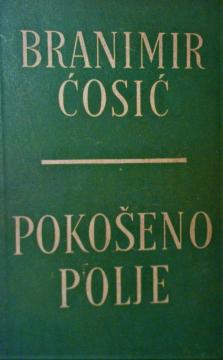
Pokošeno polje
„Gemähtes Feld“ ist der bedeutendste und letzte Roman des serbischen Schriftstellers Branimir Ćosić (1903–1934), der 1933, nur fünf Monate vor seinem Tod an Tuberkulose im Alter von 31 Jahren, fertiggestellt wurde.
Der Roman ist in zwei Teile gegliedert: Der erste Teil ist ein autobiografischer Bericht über die vom Krieg gezeichnete Kindheit und Familie des Protagonisten (Ćosićs eigenes Schicksal im Ersten Weltkrieg), der zweite Teil schildert den moralischen und sozialen Verfall des Nachkriegsjugoslawiens, Korruption, existenzielle Krisen und die Sinnlosigkeit des Lebens. Ein tragisches, introspektives Porträt einer von Krieg und Krisenzeiten zerrissenen Generation.
Branimir Ćosić, geboren im Dorf Štitar bei Šabac, studierte Philosophie und Jura in Belgrad, arbeitete als Journalist und Literaturkritiker (Politika, Vreme) und gehört zur Generation serbischer Schriftsteller zwischen den beiden Weltkriegen – realistisch-expressionistisch, mit Elementen der Gesellschaftskritik und existenzieller Melancholie. Er starb jung an Tuberkulose und hinterließ ein begrenztes Werk: die Romane „Vrzino kolo“ (1927) und „Mrtvi se vraćaju“ (1930), Sammlungen von Erzählungen und Essays. „Pokosena polja“ gilt jedoch als sein Höhepunkt und reifstes Werk.
Der Roman wurde 1933 von Geca Kon erstmals veröffentlicht. Er besteht aus zwei Teilen:
– Der erste Teil – autobiografisch, lyrisch und intim: Er schildert die Kindheit und Jugend der Hauptfigur (offensichtlich das Alter Ego des Autors) im Strudel des Ersten Weltkriegs – Hunger, Elend, Verlust der Familie, Zerstörung des Dorfes, moralischer Schock. Dies ist das „gemähte Feld“ des Lebens – eine Metapher für eine zerstörte Jugend und Generation.
– Der zweite Teil – ein umfassenderer Gesellschaftsroman: Der Held im Nachkriegsbelgien sieht sich Korruption, Bürokratie, falschen Geheimdienstinformationen, existenzieller Leere, der Unmöglichkeit von Liebe und Sinn gegenüber. Die Figuren sind typisch für die Literatur der Zwischenkriegszeit: gescheiterte Intellektuelle, Zyniker, Opportunisten. Der Stil ist psychologisch tiefgründig, geprägt von Introspektion, fragmentarischem Erzählstil und scharfsinnigen Gesellschaftsbeobachtungen.
Das Werk ist eine Kritik am Nachkriegsjugoslawien – Dekadenz, Verlust von Idealen, Sinnlosigkeit –, ähnlich den Motiven von Crnjanski (Migration), Andrić oder Kočić, jedoch mit einem stärker autobiografischen und intimen Unterton. Der Titel symbolisiert eine zerstörte Generation, die von Krieg und Zeit „niedergemäht“ wurde.
Angeboten wird ein Exemplar
- Spuren von Patina