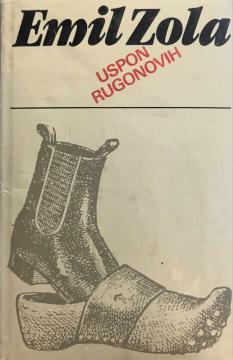

Uspon Rugonovih

Uspon Rugonovih

Émile Zola

The novel deals with the nature and social history of a family during the Second Empire. The main characters are members of the Rugon and Makari families, and the action takes place in France.

The novel follows the rise of the Rugon family and their desire for power, wealth and prestige. Etienne Rouen, a member of the Rougon family, represents the archetypal figure of a modern man whose character is marked by inner brutality. He is an industrialist obsessed with power, ambition and material wealth. Through vivid descriptions of the industrial revolution and social tensions, Zola explores the dark side of human nature, the corruption and dehumanization that result from greed and the desire for power.

"Rise of the Rugons" is a book that causes controversy due to its explicitness and pessimistic view of human nature. However, it also offers deep insights into social problems and provides insight into the mechanisms of power and their impact on the individual and society. Zola's writing style is detailed and suggestive, conjuring vivid images of the setting in which the action takes place.

Original title
Le fortune des Rougons
Translation
Vladislav Savić, Petar Borisavljević
Editor
Radovan Ždrale
Graphics design
Bogdan Kršić
Dimensions
20 x 14 cm
Pages
339
Publisher
Matica srpska, Novi Sad, 1986.
 
Distribution: 10,000 copies
 
Latin alphabet. Hardcover with dust jacket.
Language: Serbian.

One copy is available

Condition:Used, excellent condition
Damages or inconvenience notice:
  • Traces of patina
Discounted price: 5.283.96
25% discount is valid until 3/24/26 11:59 pm
 

Are you interested in another book? You can search the offer using our search engine or browse books by category.

You may also be interested in these titles

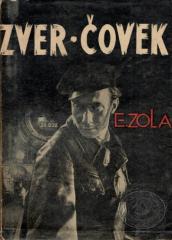
Zver-čovek

Zver-čovek

Émile Zola

The novel explores the destructive forces of inheritance, passion, and violence in modern industrial society. The action takes place largely on the railroad, a symbol of speed, destiny, and inevitable doom. “Beast Man” is the first description of crime in

Nolit, 1940.
Serbian. Latin alphabet. Paperback with dust jacket.
56.32
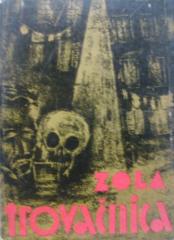
Trovačnica

Trovačnica

Émile Zola

The novel The Poisoner was published in sequels during 1876, and in book form in 1877. It is the story of a woman's struggle for happiness in the working class of Paris.

Rad, 1955.
Serbian. Latin alphabet. Hardcover with dust jacket.
8.627.49 - 9.998.62
Stranica ljubavi

Stranica ljubavi

Émile Zola
Rad, 1974.
Serbian. Latin alphabet. Hardcover.
5.844.38
Zagrepčanka

Zagrepčanka

Branislav Glumac

Branislav Glumac published a novel without periods or commas in 1974, as the relentless stream of thought of a young rebel. Published in socialist Yugoslavia, the work caused a scandal with its openness and became a classic about generational rebellion.

IROS, 1986.
Croatian. Latin alphabet. Hardcover.
8.22 - 8.24
Tri mušketira 1-2

Tri mušketira 1-2

Alexandre Dumas

Dumas' version of the story depicts the adventures of d'Artagnan and his friends from 1625 to 1628.

Epoha, 1966.
Croatian. Latin alphabet. Hardcover with dust jacket.
The book consists of two volumes
9.48
Dok ležah na samrti

Dok ležah na samrti

William Faulkner

Faulkner's 1930 novel, a classic example of modernist literature. It is often compared to Joyce's "Ulysses" for its innovative structure, but is more accessible due to its focus on family.

Rad, 1985.
Croatian. Latin alphabet. Paperback.
3.26