Povijest knjige

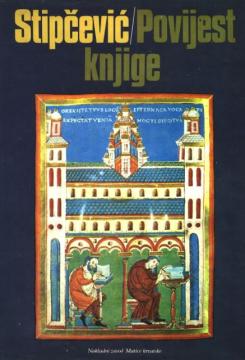
Povijest knjige

Aleksandar Stipčević

The History of the Book is an encyclopedic work that traces the development of the book from the earliest forms of writing to the modern era. The book explores the cultural, technological, and social evolution of the book as a medium of knowledge, art, an

Aleksandar Stipčević's History of the Book is an encyclopedic work that traces the development of the book from the earliest forms of writing to the modern era. The book explores the cultural, technological and social evolution of the book as a medium of knowledge, art and communication.

Stipčević begins with the beginnings of writing in Mesopotamia, Egypt and China, describing clay tablets, papyrus and parchment as the first materials. He discusses in detail ancient libraries, such as the one in Alexandria, and the role of the book in Greco-Roman culture. The Middle Ages brought codices, monastic copy workshops and the development of illuminated manuscripts, along with the influence of the church on the spread of literacy.

With the invention of the printing press by Johannes Gutenberg in the 15th century, Stipčević emphasizes the revolution in book production, the democratization of knowledge and the spread of printing in Europe. He also discusses the role of the book in the Reformation, the Renaissance and the Enlightenment, and its impact on social change. In more recent times, he deals with the industrialization of printing, the emergence of mass editions and the digital transition of the book.

The work is distinguished by its scientific thoroughness, but also by its accessibility, combining historical facts with cultural context. Stipčević emphasizes the book as a key element of civilizational progress, exploring its role in education, politics, and art. Special attention is paid to the Croatian literary tradition and the Glagolitic script.

Editor
Branimir Donat
Graphics design
Alfred pal
Dimensions
24 x 17 cm
Pages
561
Publisher
Nakladni zavod Matice hrvatske, Zagreb, 1985.
 
Latin alphabet. Hardcover with dust jacket.
Language: Croatian.

One copy is available

Condition:Used, excellent condition
 

Are you interested in another book? You can search the offer using our search engine or browse books by category.

You may also be interested in these titles

Republika 1962/10-11

Republika 1962/10-11

Miroslav Krleža, Novak Simić, Nikola Šop, Matko Peić, Višnja Stahuljak, Nikola Miličević, Archiba...
Zora, 1962.
Croatian. Latin alphabet. Paperback.
6.82
Razmatranja: drugi svezak

Razmatranja: drugi svezak

Franjo Benešić
Gradska knjižnica i čitaonica, 2009.
Croatian. Latin alphabet. Paperback.
9.54
Otkriće Indije

Otkriće Indije

Jawaharlal Nehru

The Discovery of India, written in 1946 during Nehru's time in prison, is a monumental work that explores the history, culture, and spirit of India. Nehru, a key figure in the Indian independence movement, writes about the past and with a vision for the n

Rad, 1952.
Serbian. Latin alphabet. Hardcover with dust jacket.
9.46
Komet dolazi: Uzbudljivo nasljeđe Edmonda Halleyja

Komet dolazi: Uzbudljivo nasljeđe Edmonda Halleyja

Nigel Calder

The book explores the fascinating world of comets, with a focus on Halley's Comet, whose return in 1986 served as the impetus for the book. Calder explores the history of man's relationship with comets, from ancient myths to modern science.

Otokar Keršovani, 1985.
Croatian. Latin alphabet. Hardcover with dust jacket.
6.845.42 - 7.226.84
Juriš u vasionu: Jedna reportaža kroz istoriju čovečjeg leta

Juriš u vasionu: Jedna reportaža kroz istoriju čovečjeg leta

Oto Bihalji-Merin

A fascinating work that chronologically and artistically traces man's quest for flight, from mythological beginnings to modern achievements in aviation. The author explores how the idea of ​​flight has shaped human imagination and art throughout the centu

Nolit, 1936.
Serbian. Latin alphabet. Hardcover.
12.34
Hram i loža

Hram i loža

Michael Baigent, Richard Leigh

Although considered controversial by historians and often criticized as speculative and lacking solid evidence, the book is indispensable and extremely influential – it directly inspired Dan Brown's "The Da Vinci Code" and the entire genre of esoteric lit

Stari grad, 2005.
Croatian. Latin alphabet. Hardcover.
17.22 - 17.28