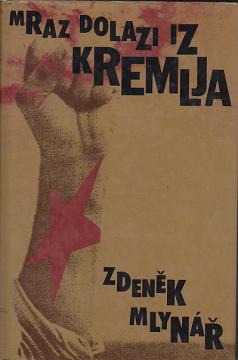
Mraz dolazi iz Kremlja
Two copies are available
Copy number 2
- Library stamp
- Traces of patina

Two copies are available
Are you interested in another book? You can search the offer using our search engine or browse books by category.
Josip Mihaljević's book analyzes the relationship between the government and the individual in communist Croatia (1958–1972), through repressive mechanisms, ideological pressures, and restrictions on personal freedom in the socialist system.
A non-fiction work by a Slovenian investigator of the UDB archives. The author, a former KOS employee, left the army after learning about the crimes of the Yugoslav army during the war and the post-war period, and dedicated himself to exposing the secret
Hitler's book combines autobiography and political manifesto, laying the foundations of Nazi ideology. The work has been banned in many countries for promoting hatred, but it remains a historical document that reveals the origins of Nazi crimes.
A novel by Igor Torkar (Boris Fakin) dealing with "Dachau processes". Through a mixture of documentary and fiction, Torkar exposes the taboo subject of the communist regime, basing the story on his own experience as a prisoner in Dachau and Goli otok.
The autobiographical work of Croatian communist activist Vladimir Novak, a survivor of the Ustasha camps, follows his memories of resistance to fascism during World War II.
Amir Duranović's book reconstructs in detail the dramatic year 1966 and the Fourth (Brion) Session of the Central Committee of the Communist Party of Yugoslavia (July 1–2, 1966), at which Aleksandar Ranković, the long-time head of the UDB and vice preside