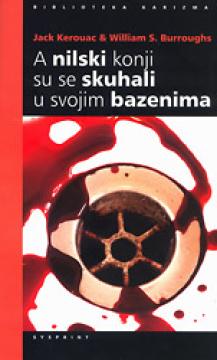
A nilski konji su se skuhali u svojim bazenima
And Hippos Boiled in Their Pools is an engaging, fast-paced read. It is also an unparalleled work of art, a legendary novel written by two extremely influential writers at the dawn of the beatnik movement.
On August 14, 1944, Lucien Carr, a friend of William S. Burroughs from St. Louis, stabbed a man named David Kammerer with a scout knife and threw his body into the Hudson River. For eight years, Kammerer had been chasing young Carr, but something happened that night: either Carr had finally boiled over, or he had to defend himself.
The next day, Carr, his clothes stained with blood, went to his friends Bill Burroughs and Jack Kerouac to ask for help. By doing so, he dragged them into crime. A few months later, they became involved in the crime in a different way.
Something about the murder mesmerized beatniks, especially Kerouac and Burroughs, who decided to work together on a novel about the events of the previous summer. At that time, both authors were unknown, they were just hoping to write something notable. Taking turns narrating their chapters, they pieced together a hard-boiled tale of bohemian New York at the time of World War II, filled with drugs and art, obsessions and violence, with scenes and characters they carried over from their own lives.
He pitched his manuscript, "And the Hippos Boiled in Their Pools" — after an absurd line from a radio news report about a fire in a circus — to publishers, but it was rejected and thrown into a drawer, where it languished for decades. Finally published in 2008, after a long time.
"And the Hippos Were Boiled in Their Tanks" (And the Hippos Were Boiled in Their Tank) tells the story of Ramsay Allen and the object of his fixation: the charismatic, young idealist Phillip Tourian. Phillip drank and daydreamed with the company in the bars and apartments of the West Village, until he hatched a plan with his friend Mike Ryk (Kerouac's narrator) to board a merchant ship. He will jump on the line to France, escape from the ship and then make his way across the front line to Paris.
No copies available
The last copy was sold recently.