Mala knjiga stoicizma

Mala knjiga stoicizma

St. George Stock

In earlier Greek philosophers, virtue was aristocratic and exclusive. Stoicism gave it to the lowest layers of humanity. In the kingdom of wisdom there was no barbarian, no Scythian, bound or free.

The only real liberty was to serve philosophy, or, which was the same thing, to serve God; and this could be done at any station in life.

The only condition for communion with the gods and good men was the possession of a certain mentality, which could equally belong to a master, a freed slave or a slave. Instead of arrogantly proving the natural nobility of the Greeks, we now hear that true nobility is a good mind. Birth is not important; all descended from the gods.

"The door of virtue is not closed to any man; they are open to everyone, they accept everyone, they invite everyone - free people, freed slaves, slaves, kings and exiles. Their choice is not a choice of family or wealth, but is satisfied with the man himself». Wherever there was a human being, Stoicism saw a field for doing good.

"Every thing that occupies the soul, that brings us benefit or that we love, remember to call it by its right name, starting with the smallest. If you like the pot, say "I love the pot", so you won't get upset when it breaks. If you love your child or your wife, say "I love a human being", so you won't be sad if he dies.»

"With the beautiful thoughts you feel inside, I advise you, go among the uneducated only with extreme caution; otherwise you will melt like wax in the sun. So crawl anywhere away from the sun as long as your views are as soft as wax». (Epictetus)

Original title
A little book of stoicism
Translation
Igor Brajković
Dimensions
20 x 14 cm
Pages
105
Publisher
CID-NOVA, Zagreb, 2008.
 
Latin alphabet. Paperback.
Language: Croatian.
ISBN
978-9-53656-688-4

No copies available

The last copy was sold recently.


Are you interested in another book? You can search the offer using our search engine or browse books by category.

You may also be interested in these titles

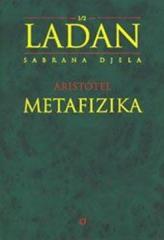
Metafizika

Metafizika

Aristotel

Metaphysics is Aristotle's most famous and influential philosophical work, consisting of 14 books. The name Metaphysics is not Aristotle's – it came later because the writings were placed "behind physics" (meta ta physika).

Medicinska naklada, 2001.
Croatian. Latin alphabet. Hardcover.
15.00
Katon Stariji ili O starosti

Katon Stariji ili O starosti

Marko Tulije Ciceron

Second, revised edition of the Croatian translation of the famous work Cato Maior de Senectute (44 BC). A philosophical dialogue in which Cato the Elder refutes prejudices about old age and celebrates its advantages.

Knjižarnica Lavoslava Hartmana, 1911.
Croatian. Latin alphabet. Paperback.
11.56
Filozofija kao način življenja: Razgovor sa Žani Karlije i Arnoldom I. Dejvidsonom

Filozofija kao način življenja: Razgovor sa Žani Karlije i Arnoldom I. Dejvidsonom

Pierre Hadot

In the book of interviews, Pierre Hadot explains through his personal life story and conversations with Jeannie Carlier and Arnold I. Davidson why ancient philosophy was above all a way of life and a spiritual exercise, and not just theoretical knowledge.

Fedon, 2011.
Serbian. Latin alphabet. Paperback with dust jacket.
17.32
Veština pamćenja

Veština pamćenja

Frances A. Yates

The Art of Memory (1966), one of the most significant works of intellectual history, explores the history of mnemonics from ancient Greece and Rome, through the Middle Ages and the Renaissance, to its influence on the science and culture of Europe.

Mediterran Publishing, 2013.
Serbian. Latin alphabet. Paperback.
19.34
Subjektivnost i istina: Predavanja na Collège de France, 1980.–1981.

Subjektivnost i istina: Predavanja na Collège de France, 1980.–1981.

Michel Foucault

Foucault explores how in antiquity subjectivity and truth were linked through the relationship to the body, pleasures, and self-care, and how this connection gradually changed towards the Christian model of confession.

Sandorf, 2019.
Croatian. Latin alphabet. Paperback.
19.00
Gorgija: O sofistima

Gorgija: O sofistima

Platon

Plato's dialogue Gorgias (c. 380 BC) in which Socrates debates with Gorgias, Polus, and Callicles about the nature of rhetoric, power, justice, and the good life. A harsh criticism of the Sophists and their oratory as flattery rather than knowledge.

Kontrast, 2025.
Serbian. Latin alphabet. Paperback.
10.00