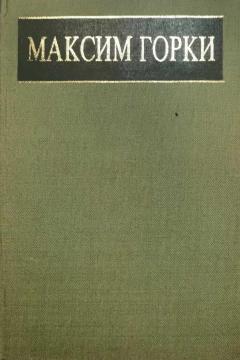
Pripovetke

Pripovetke

Maksim Gorki

Maxim Gorky was a famous Russian writer, playwright and political activist. His works left a deep mark in the world of literature.

The book contains:

  • Hermit
  • A story about unrequited love
  • The story of a hero
  • The story of a novel
  • Karamora
  • Funny story
  • Behind the scenes
  • Blue life
  • A story about the unusual
  • Guide
  • Mom of the Kemskis
  • Killers
  • Emblem
  • About the cockroach

Translation
Mira Čehova, Desanka Maksimović
Editor
Milorad Đurić
Dimensions
21 x 14.5 cm
Pages
448
Publisher
Srpska književna zadruga (SKZ), Beograd, 1977.
 
Distribution: 4,000 copies
 
Cyrillic alphabet. Hardcover.
Language: Serbian.

No copies available

The last copy was sold recently.


Are you interested in another book? You can search the offer using our search engine or browse books by category.

You may also be interested in these titles

Moji univerziteti

Moji univerziteti

Maksim Gorki
Rad, 1959.
Serbian. Latin alphabet. Paperback.
0.99
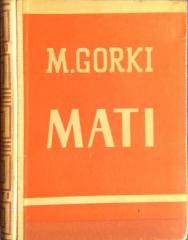
Mati

Mati

Maksim Gorki

Roman "Mati" Maksima Gorkog objavljen je 1906. godine i jedno je od ključnih djela ruskog socijalnog realizma. Djelo prikazuje buđenje radničke klase u Rusiji kroz likove i događaje koji naglašavaju društvene nepravde i potrebu za revolucijom.

Glas rada, 1950.
Croatian. Latin alphabet. Hardcover with dust jacket.
4.36
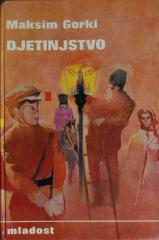
Djetinjstvo

Djetinjstvo

Maksim Gorki
Mladost, 1982.
Croatian. Latin alphabet. Hardcover.
2.99 - 3.98
Children Are Civilians Too

Children Are Civilians Too

Heinrich Böll

These twenty-six stories illustrate Heinrich Boll's finely nuanced storytelling at its best. In stunning portraits of ordinary people, Boll creates a rich tapestry of the dark years in postwar Germany.

Penguin Books Ltd, 1976.
English. Latin alphabet. Paperback.
11.70
Mirza

Mirza

Henryk Sienkiewicz
Mlado pokolenje, 1967.
Serbian. Latin alphabet. Hardcover with dust jacket.
4.88
Ljubomorni Estremadurac

Ljubomorni Estremadurac

Miguel de Cervantes

The Jealous Extremaduran is a dark, psychological tale about the destructive power of jealousy. The novel is a satire on possessiveness, fear of women's freedom, and the illusion that happiness can be "locked in." One of Cervantes' most poignant "exemplar

Džepna knjiga, 1957.
Croatian. Latin alphabet. Paperback.
3.72