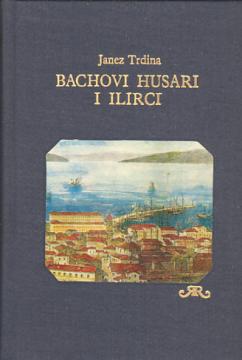
Bachovi husari i Ilirci: sjećanja iz mojih profesorskih godina u Hrvatskoj (1853–1867)

Bachovi husari i Ilirci: sjećanja iz mojih profesorskih godina u Hrvatskoj (1853–1867)

Janez Trdina

"Bach's Hussars and the Illyrians" is an autobiographical work by the Slovenian writer Janez Trdina, in which the author describes his experience as a professor in Croatia during the period of Bach's absolutism (1853–1867).

The book provides insight into the political and social climate of the time, marked by attempts at Germanization and centralization by the Viennese authorities.

Trdina describes in detail how foreign professors, often from Slovenia, the Czech Republic, Poland, and Tyrol, were sent to Croatian schools with the aim of suppressing the Croatian language and identity. These "Bach's hussars," as the author calls them, served as instruments of Viennese policy to suppress national consciousness among Croats.

Through his memoirs, Trdina also analyzes the relationship between the Slovenian and Croatian peoples, highlighting the similarities and differences in their reactions to political pressures. He pays special attention to the language issue, emphasizing the importance of preserving the mother tongue as the foundation of national identity.

Contents:

  • Foreword: Tone Potokar
  • Varaždin-Germanized Croatian gentlemen- first appearances of Bach's Hussars
  • In the center of Croatia – Illyrian priests, an example of patriotism, progress and character – The immense significance of Illyrianism for the spiritual growth and progress of the Croatian people
  • Bach wants to Germanize Croats with the help of bureaucracy
  • Croatia Rijeka and the Rijeka Gymnasium
  • Slavic and German professors of the Rijeka Gymnasium
  • Štefan Vidic, Principal of the Rijeka Gymnasium
  • School superintendent DR. Anton Jarc
  • Alphabetical list of personalities

Original title
Bachovi huzarji in Iliri
Translation
Tone Potokar
Dimensions
21 x 14 cm
Pages
290
Publisher
Grafički zavod Hrvatske (GZH), Zagreb, 1980.
 
Latin alphabet. Hardcover.
Language: Croatian.

No copies available

The last copy was sold recently.
 

Are you interested in another book? You can search the offer using our search engine or browse books by category.

You may also be interested in these titles

Stari Zagreb

Stari Zagreb

Gjuro Szabo

A classic work of Croatian historiography, published in 1941, which provides a fascinating overview of the historical development of Zagreb, from its earliest mentions to Szabin's time, and is an indispensable source for anyone who wants to better underst

Spektar, 1971.
Croatian. Latin alphabet. Hardcover.
11.32
Lex Perković: Tajna udbaškog ubojstva

Lex Perković: Tajna udbaškog ubojstva

Večernjak's collection of political documentaries

Večernji list, 2013.
Croatian. Latin alphabet. Paperback.
1.98
Gotovina: stvarnost i mit

Gotovina: stvarnost i mit

Ivica Đikić, Davor Krile, Boris Pavelić

Hero or criminal? War genius or military dilettante? Liberator or persecutor of Serbian civilians? The three journalists do not offer cheap and unequivocal answers to these questions.

Novi Liber, 2010.
Croatian. Latin alphabet. Paperback.
11.26
Hrvati koji su stvarali Europu

Hrvati koji su stvarali Europu

Ivan Tanta

The book collects short biographies of thirty Croatians who, through their work in various fields of science, art and society, have made a contribution to European history.

Stari grad, 2003.
Croatian. Latin alphabet. Hardcover.
6.72 - 6.82
Ante Gotovina

Ante Gotovina

Mladen Pavković

The book deals with General Anto Gotovina, that is, the indictment brought against him at the Hague Tribunal, as well as the political climate in Croatia at the time of the indictment and Gotovina's escape from the Croatian judiciary.

Alineja, 2005.
Croatian. Latin alphabet. Hardcover.
17.36
Zaraćeno poraće: Konfliktni i konkurentski narativi o stradanju i iseljavanju Talijana Istre

Zaraćeno poraće: Konfliktni i konkurentski narativi o stradanju i iseljavanju Talijana Istre

Franko Dota

The book analyzes how conflicting historical narratives about the suffering and mass emigration of Italians from Istria and Rijeka developed in Croatia and Italy after World War II (1943–1956), debunking myths and encouraging an empathetic approach to the

Srednja Europa, 2010.
Croatian. Latin alphabet. Paperback.
11.32