Lutka I-II

Lutka I-II

Boleslav Prus

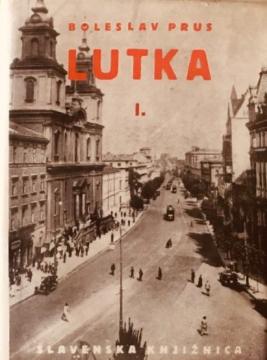
"The Doll" by Bolesław Prusa (real name Aleksander Glowacki) is a novel that explores social and moral problems in Poland during the 19th century.

The main character, Stanisław Wokulski, a rich merchant, falls in love with a beautiful aristocrat, Izabela Łęcka. Their story is complex, imbued with themes of love, class and human psychology.

Wokulski struggles with his own ambitions and disappointments, while trying to find his place in a society that is often unfair and superficial. Through the characters and their relationships, Prus shows the conflicts between tradition and modernity, and social inequality.

The novel is known for its detailed depiction of the characters' psychological states and social circumstances, which gives Prus a strong impression of human nature and moral dilemmas. "The Doll" remains a significant work of Polish literature, reflecting deeply on the challenges of the time in which it was written.

Original title
Lalka
Translation
Julije Benešić
Dimensions
20 x 14 cm
 
The book consists of two volumes.
Pages total
889
Publisher
Matica hrvatska, Zagreb, 1946.
 
Latin alphabet. Hardcover with dust jacket.
Language: Croatian.

No copies available

The last copy was sold recently.

 

Are you interested in another book? You can search the offer using our search engine or browse books by category.

You may also be interested in these titles

Vjetar

Vjetar

Petar Šegedin
Globus, 1986.
Croatian. Latin alphabet. Hardcover with dust jacket.
3.98
Ta slatka mučnina

Ta slatka mučnina

Patricia Highsmith

The novel That Sweet Nausea (1960) delves into the dark depths of obsession and duality. Highsmith masterfully dissects the boundaries between love and madness, creating a tense portrait of a man trapped in his own lies, where illusion crumbles under the

Pegaz, 1997.
Croatian. Latin alphabet. Paperback.
3.48
Velike porodice

Velike porodice

Maurice Druon

Big families is Drion's best novel. In it, the writer, in a very vivid and striking way, gave a cross-section of French society after the First World War: some characters of the novel become like living witnesses of their time.

Kosmos, 1960.
Serbian. Latin alphabet. Hardcover with dust jacket.
6.54
Usporena plima

Usporena plima

Emil S. Petrović
Svjetlost, 1957.
Serbian. Latin alphabet. Paperback.
2.60
Gorski vijenac

Gorski vijenac

Petar II Petrović Njegoš

In Gorski vijenac, Njegoš sings about the "investigation of the wanderers", an event that allegedly took place in Montenegro at the end of the seventeenth century, but about which there is no reliable data in historical science.

Školska knjiga, 1974.
Croatian. Latin alphabet. Paperback.
3.98
Poslednji živi mrtvac

Poslednji živi mrtvac

Branislav Glumac
Zora, 1965.
Croatian. Latin alphabet. Hardcover with dust jacket.
0.99