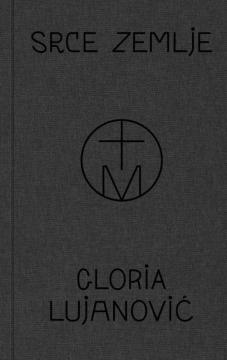
Srce zemlje

Srce zemlje

Gloria Lujanović

Gloria Lujanović wrote about the suffering of Croats in Central Bosnia as a young journalist. In the book Heart of the Country, the author speaks from a very personal perspective about the events that marked the lives of the generation that was just born

With this intimate essay-poetic dedication to victims and survivors, Gloria Lujanović gave a voice to those who were forgotten and hushed up by everyone.

"The sentence with which Glorija Lujanović begins her poignant book Heart of the Country ("In my family, time was divided into before and after the war"), is the best description of a mentality characteristic of Bosnia and Herzegovina as a whole, which the author emphasizes already in the next sentence. , which is both deep and superficial, Glorija Lujanović gives a broader picture of an era, with the help of which it is partially possible to detect the causes of today's almost pre-apocalyptic state in the world a kind of uncompromising and self-imposed redemption towards those who suffered (and still suffer) more than the author herself and her family.And for that you have to be infinitely empathetic and able to empathize with the sufferings of others, which is an extremely rare phenomenon today. from the foreword by Josip Mlakić

Editor
Anita Milićević, Gordana Farkaš Sfeci
Illustrations
Petra Franjić
Graphics design
Lana Cavar, Narcisa Vukojević
Dimensions
20 x 13 cm
Pages
164
Publisher
Oceanmore, Zagreb, 2023.
 
Latin alphabet. Hardcover.
Language: Croatian.
ISBN
978-9-53332-175-2

No copies available

The last copy was sold recently.
 

Are you interested in another book? You can search the offer using our search engine or browse books by category.

You may also be interested in these titles

Kad ste utopljeni u plamenu

Kad ste utopljeni u plamenu

David Sedaris

If it seems to you that beneath the surface of the sometimes monotonous everyday life lies a hilarious absurdity, David Sedaris will finally convince you of that.

Algoritam, 2010.
Croatian. Latin alphabet. Paperback.
3.98
Sizifova sreća - razgovori, kronike

Sizifova sreća - razgovori, kronike

Ivan Lovrenović

Ivan Lovrenović's collection documents thirty years of change in Bosnia and Herzegovina through interviews, essays, and dialogues. The author, a witness to the era, examines old attitudes in the new reality, emphasizing the atrophy of rationality and soci

Synopsis, 2018.
Croatian. Latin alphabet. Paperback.
12.5410.03
Kako što nastaje: novine, film, teatar

Kako što nastaje: novine, film, teatar

Karel Čapek

In a witty and instructive essay, Čapek describes how a newspaper, a film, and a theater play are created. Through humor and irony, he shows the complexity of the process – from idea to realization – and the different perspectives of the participants, dem

Znanje, 1985.
Croatian. Latin alphabet. Paperback.
4.76
Ulazeći u Varcar

Ulazeći u Varcar

Ivan Lovrenović

The hybrid book – a novel, poem and essay in one – is a dedication to his native Varcar, a small village in central Bosnia, where the author's roots intertwine with the history, myth and chaos of the 20th century.

Fraktura, 2016.
Croatian. Latin alphabet. Hardcover with dust jacket.
14.42
Po-etika, knjiga druga

Po-etika, knjiga druga

Danilo Kiš

A collection of interviews that complements the first book of essays from 1972. As a lecturer in Serbo-Croatian at the University of Bordeaux, Kiš reveals in conversations the core of his "po-ethics" - a morally and aesthetically charged vision of literat

Ideje, 1974.
Serbian. Latin alphabet. Paperback.
8.56
I drugi su pjevali o ratu: Odjeci raspada Jugoslavije u engleskoj i američkoj književnosti

I drugi su pjevali o ratu: Odjeci raspada Jugoslavije u engleskoj i američkoj književnosti

Muharem Bazdulj

In this book of essays, Muharem Bazdulj analyzes how the collapse of Yugoslavia and the wars of the 1990s resonated in Anglo-Saxon literature – from pre-war stereotypes to war and post-war depictions.

Biblioteka XX vek, 2013.
Croatian. Latin alphabet. Paperback.
8.24