Teozofija: uvod u nadosjetilnu spoznaju svijeta i određenje čovjeka
Rare book

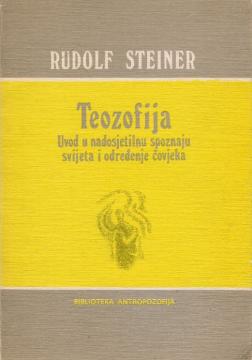
Teozofija: uvod u nadosjetilnu spoznaju svijeta i određenje čovjeka

Rudolf Steiner

One of the fundamental works in the field of anthroposophy as a spiritual science. In the work Theosophy, Rudolf Steiner presents the fundamental principles of spiritual science, explaining the nature of man and his relationship to the spiritual worlds.

Steiner in the book talks about the whole human being (which consists of body, soul and spirit), about the world of the soul and the land of spirits and what happens to the human soul and spirit when he crosses the threshold of death. Special chapters are devoted to the reincarnation of the spirit and destiny, forms of thought and human aura, and the path of knowledge on which each step in raising consciousness must be followed by three steps in self-education.

The book consists of four parts:

  • The nature of man: Steiner describes man as a three-membered being composed of body, soul and spirit. It distinguishes between the physical body, the etheric body (life force), the astral body (emotions and consciousness) and the Self (spiritual center).
  • Soul World: Shows levels of existence beyond the physical, including the soul world, where man experiences feelings and thoughts after death.
  • The spiritual world Describes the evolution of the spirit through reincarnation and karma and how man can develop the ability of supersensible cognition.
  • The path of knowledge: Steiner gives guidelines for spiritual development through meditation, inner discipline and moral improvement.

The work represents the foundation of anthroposophy, guiding the reader towards higher levels of consciousness and understanding of cosmic laws.

Original title
Theosophie: Einfuhrung in ubersinnliche Welterkenntnis und Menschenbestimmung
Translation
Milica Vizec
Editor
Vesna Vinković
Graphics design
Darko Bubanko
Dimensions
20.5 x 14 cm
Pages
140
Publisher
Društvo prijatelja waldorfske pedagogije, Zagreb, 1990.
 
Latin alphabet. Paperback.
Language: Croatian.

No copies available

The last copy was sold recently.
 

Are you interested in another book? You can search the offer using our search engine or browse books by category.

You may also be interested in these titles

Politika simbola

Politika simbola

Ivan Čolović

The essays collected in this book are inspired by the idea that politics is largely a matter of symbols.

Biblioteka XX vek, 2000.
Serbian. Latin alphabet. Paperback.
9.64
Divlja Evropa

Divlja Evropa

Božidar Jezernik

At the center of Jezernik's scientific work is ethnological and anthropological research of the Balkans and Eastern Europe.

Biblioteka XX vek, 2007.
Serbian. Latin alphabet. Paperback.
9.98
Skriveno lice vremena

Skriveno lice vremena

Michael Hulin

The Hidden Face of Time (1985) by Michel Hulin, a French Indologist and historian of religions, explores the concept of death and the afterlife through a comparative analysis of different cultures and religious traditions.

Naprijed, 1989.
Croatian. Latin alphabet. Hardcover with dust jacket.
11.52
Orlov dar

Orlov dar

Carlos Castaneda

The Eagle's Gift is not just a shamanic manual, but also a philosophical meditation on the nature of reality, death, and the possibility of transcendence. Castaneda invites the reader to question their own beliefs about the world and open themselves to ne

August Cesarec, 1983.
Croatian. Latin alphabet. Hardcover with dust jacket.
13.34
Nauka o čovjeku: Za gimnazije

Nauka o čovjeku: Za gimnazije

Franjo Dolenec, Ante Lui

"The Science of Man" is a textbook by Franjo Dolenec and Ante Lui, intended for high school students. The book provides a fundamental understanding of human anatomy and physiology, adapted for high school education.

Školska knjiga, 1967.
Croatian. Latin alphabet. Paperback.
6.84
Kultura neandertalaca: Čuvari drevne mudrosti

Kultura neandertalaca: Čuvari drevne mudrosti

In this strongly documented book, the British psychologist and researcher claims that Neanderthals were the bearers of an older, more powerful, and spiritually richer culture than Cro-Magnon ("modern" man), and that it was their tradition that formed the

Stari grad, 2006.
Croatian. Latin alphabet. Hardcover.
14.22 - 14.28