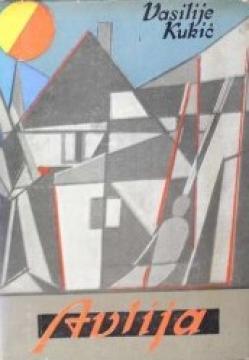
Avlija

Avlija

Vasilije Kukić

The courtyard is a deep analysis of human relations in the Bosnian context, where Kukić explores the universal themes of love, freedom and morality through the prism of the community in the courtyard, with a strong sense of the local color and historical

The novel "Avlija" is set in a small town in Bosnia and Herzegovina during the Ottoman rule, and through the story of a small community in a courtyard, it explores human destinies, moral dilemmas and social relationships. The courtyard, as a central symbol, represents a closed world where different cultures, religions and destinies mix, reflecting the complexity of Bosnian multicultural society.

The plot follows the everyday life of the courtyard's inhabitants: from merchants and craftsmen to ordinary people faced with love, family and existential challenges. Through a series of episodes, Kukić depicts conflicts between tradition and modernity, individual desires and collective norms. The characters are complex – everyone carries their own burdens, from unfulfilled dreams to hidden guilt. The characters of the old imam, whose wisdom and melancholy connect the stories, and the young girl whose love story symbolizes the longing for freedom, stand out in particular.

Kukić's style is realistic, with an emphasis on detailed descriptions of the setting and psychological introspection. The language is rich, imbued with local expressions, which gives authenticity to the presentation of the Bosnian milieu. The novel is read as a mosaic of stories, where the courtyard becomes a metaphor for life - a space of coexistence, but also of conflict.

Editor
Radivoje Pešić
Graphics design
Jovan Kukić
Dimensions
19.5 x 13.5 cm
Pages
214
Publisher
Kosmos, Beograd, 1963.
 
Latin alphabet. Hardcover with dust jacket.
Language: Serbian.

One copy is available

Condition:Used, very good condition
Damages or inconvenience notice:
  • The cover is missing
 

Are you interested in another book? You can search the offer using our search engine or browse books by category.

You may also be interested in these titles

Proces

Proces

Franz Kafka

Kafka wrote The Process between 1914 and 1915, published posthumously in 1925. The novel is unfinished but with an added final chapter by Max Brod. Edition with a foreword by B. Živojinović and an afterword by Walter Killi.

BIGZ, 1990.
Serbian. Latin alphabet. Paperback.
4.26
Tri mušketira 1-2

Tri mušketira 1-2

Alexandre Dumas

Dumas' version of the story depicts the adventures of d'Artagnan and his friends from 1625 to 1628.

Epoha, 1966.
Croatian. Latin alphabet. Hardcover with dust jacket.
The book consists of two volumes
9.48
Stotina godina (antikronika)

Stotina godina (antikronika)

Dario Harjaček

The novel One Hundred Years by Dario Harjaček provides a panoramic view of Trešnjevka and its inhabitants through a century of changes, ideologies, and human destinies – a mosaic of Zagreb in which life, art, and history intertwine.

Oceanmore, 2025.
Croatian. Latin alphabet. Paperback.
13.42
Kreutzerova sonata, Hadži-Murat

Kreutzerova sonata, Hadži-Murat

Lav Nikolajevič Tolstoj

Kreutzer's sonata belongs to those works of Tolstoy that the writer adapted in many ways to his view on moral issues, on marital morality above all.

Civitas, 2004.
Croatian. Latin alphabet. Paperback.
4.98
Eva Luna

Eva Luna

Isabel Allende

Eva Luna is a novel about a poor storyteller who weaves lives with words, written by Isabel Allende, the founder of Latin American magical realism. Published after the success of The House of the Spirits, this whirlwind of adventure combines love, revolut

Znanje, 1990.
Croatian. Latin alphabet. Hardcover with dust jacket.
8.36
Dok ležah na samrti

Dok ležah na samrti

William Faulkner

Faulkner's 1930 novel, a classic example of modernist literature. It is often compared to Joyce's "Ulysses" for its innovative structure, but is more accessible due to its focus on family.

Rad, 1985.
Croatian. Latin alphabet. Paperback.
3.26