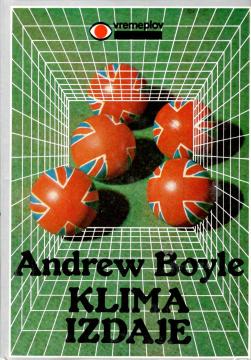
Klima izdaje

Klima izdaje

Andrew Boyle

A detailed study of the infamous Cambridge spies, a group of British intellectuals who spied for the Soviet Union during the 20th century. The book is written in a documentary style, but with a tense narrative, making it a compelling read about betrayal a

The book focuses on five key actors – Kim Philby, Donald Maclean, Guy Burgess, Anthony Blunt and John Cairncross – known as the "Cambridge Five". Boyle explores their motives, ideological leanings and the circumstances that led them to betray their country.

The plot follows their lives from their student days at Cambridge, where, influenced by left-wing ideas and disillusionment with Western capitalism during the Great Depression, they were recruited by Soviet intelligence. The book details their activities during World War II and the Cold War, including the transfer of sensitive information to the USSR, which had far-reaching consequences for British and Western security. Particular emphasis is placed on Philby, whose ability to evade detection over the years has become legendary.

Boyle dissects the psychological and social factors behind their betrayal, including privileged backgrounds, feelings of superiority, and ideological conviction. It also explores the inability of the British authorities to detect spies in a timely manner, revealing the weaknesses of the intelligence system.

Original title
The Climate of Treason
Translation
Maroje Mihovilović
Editor
Zdravko Židovec
Graphics design
Boris Dogan
Dimensions
20 x 14 cm
Pages
391
Publisher
August Cesarec, Zagreb, 1982.
 
Latin alphabet. Hardcover with dust jacket.
Language: Croatian.

One copy is available

Condition:Used, excellent condition
Discounted price: 6.244.68
25% discount is valid until 7/10/26 11:59 pm
 

Are you interested in another book? You can search the offer using our search engine or browse books by category.

You may also be interested in these titles

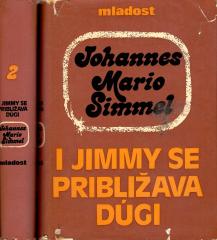
I Jimmy se približava dugi 1-2

I Jimmy se približava dugi 1-2

Johannes Mario Simmel

A political and psychological drama set in Vienna between 1938 and 1969. Although inspired by real events from the West German metropolis between 1934 and 1965, the author changed the time and place of the action to protect the identities of real people.

Mladost, 1977.
Croatian. Latin alphabet. Hardcover with dust jacket.
The book consists of two volumes
6.74 - 8.64
Spasitelji života: detektivski roman iz povijesti medicine

Spasitelji života: detektivski roman iz povijesti medicine

Josef Löbel

Lifesavers (1935) by Josef Löbel is a popular science work that, through suspenseful stories from the history of medicine, depicts doctors and scientists whose discoveries changed humanity.

Naklada Binoza, 1935.
Croatian. Latin alphabet. Hardcover with dust jacket.
7.32
Urotnička pisma Marina Držića - s faksimilima pisama

Urotnička pisma Marina Držića - s faksimilima pisama

Marin Držić

The Conspiratorial Letters of Marin Držić represent an exceptionally important document of Croatian political and literary history of the 16th century. With a reprint of the original manuscript of the Conspiratorial Letters and the "bill of exchange" of M

Sveučilišna naklada Liber (SNL), 1989.
Croatian. Latin alphabet. Paperback.
21.46
Dnevnik 1: Dnevnik 1914 - 17 (Davni dani I)

Dnevnik 1: Dnevnik 1914 - 17 (Davni dani I)

Miroslav Krleža

The 1914–17 diary records Krleža's writings from the First World War: personal dilemmas, pacifism, conflict with the militarism of the Monarchy, and intellectual maturation in the years of the collapse of the old world.

NIŠRO Oslobođenje, 1981.
Croatian. Latin alphabet. Hardcover.
6.78
Tri sata: Roman međimurskog preokreta 1918.

Tri sata: Roman međimurskog preokreta 1918.

Đuro Vilović

The work, first published in 1935, provides a documentary account of events related to the liberation of Međimurje from Hungarian rule and its annexation to the Kingdom of Serbs, Croats and Slovenes in 1918.

Naklada Binoza, 1935.
Croatian. Latin alphabet. Hardcover.
7.955.96
Kako stoje stvari: Predavanje održano u Domu JNA u Zagrebu 17. 12. 1952.

Kako stoje stvari: Predavanje održano u Domu JNA u Zagrebu 17. 12. 1952.

Miroslav Krleža

In his lecture How Things Are (1952), Krleža discusses the political and cultural situation of post-war Yugoslavia, emphasizing the need for critical thought, cultural renewal, and resistance to dogmatism.

Zora, 1953.
Croatian. Latin alphabet. Paperback.
12.48