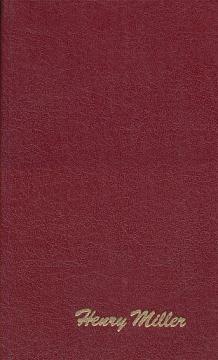
Ružičasto raspeće II: Plexus

Ružičasto raspeće II: Plexus

Henry Miller

Plexus (1953), the second part of the trilogy, continues the autobiographical story begun in Sexus. The novel focuses on Miller's life in New York in the 1920s, exploring his artistic pursuits, relationships, and struggle for freedom from social conventio

The protagonist, Miller's alter ego, lives a bohemian life, trying to establish himself as a writer. Married to Maude, he feels trapped, while his obsession with Mara (inspired by June Mansfield) fades, but continues to affect his emotions. The novel is less concerned with sexuality than Sexus, and more with introspection and artistic ambition. Miller describes encounters with eccentric characters - artists, writers and bohemians - who shape his worldview. Through conversations and digressions, he explores themes of literature, philosophy and spirituality, often drawing on his reading of Dostoevsky, Nietzsche and Eastern thinkers.

The style is poetic, associative and introspective, with less emphasis on eroticism and more on the internal conflict between material needs and spiritual freedom. The novel depicts New York as a colorful, chaotic stage, where the protagonist seeks authenticity through art and friendships. Plexus is the story of an artist's coming of age, interwoven with reflections on creativity and resistance to conformity. Without a strict plot, the novel builds the foundation for the final part of the trilogy, Nexus.

Original title
The Rosy Crucifixion II: Plexus
Translation
Leonard Spalatin
Dimensions
20 x 13 cm
Pages
559
Publisher
Otokar Keršovani, Rijeka, 1978.
 
Latin alphabet. Hardcover.
Language: Croatian.

One copy is available

Condition:Used, excellent condition
Discounted price: 6.244.37
30% discount is valid until 4/27/26 11:59 pm
 

Are you interested in another book? You can search the offer using our search engine or browse books by category.

You may also be interested in these titles

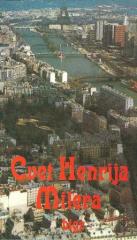
Cvet Henrija Milera

Cvet Henrija Milera

Henry Miller

The book Flower by Henry Miller is based on a selection from the best and most attractive works of this writer, following the chronological sequence in Miller's writing, giving Miller's most artistically mature pages.

BIGZ, 1988.
Serbian. Latin alphabet. Paperback.
5.32
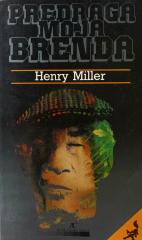
Predraga moja Brenda

Predraga moja Brenda

Henry Miller

Henry Miller's Love Letters to Brenda Venus. If you're looking for Miller's raw passion in a tender epilogue, this is an emotional glimpse into the heart of a rebel—touching, witty, and compelling.

August Cesarec, 1987.
Croatian. Latin alphabet. Paperback.
4.32
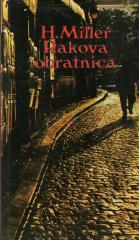
Rakova obratnica

Rakova obratnica

Henry Miller

This is an accusation, a slander, a personal insult. This is not a book, in the ordinary sense of the word. No, this is a continuous insult, a spit in the face of Art, a foot in the tur against God, Man, Fate, Time, Love, Beauty...whatever you want.

Sveučilišna naklada Liber (SNL), 1981.
Croatian. Latin alphabet. Hardcover with dust jacket.
6.30 - 7.56
Ulazeći u Varcar

Ulazeći u Varcar

Ivan Lovrenović

The hybrid book – a novel, poem and essay in one – is a dedication to his native Varcar, a small village in central Bosnia, where the author's roots intertwine with the history, myth and chaos of the 20th century.

Fraktura, 2016.
Croatian. Latin alphabet. Hardcover with dust jacket.
14.42
Deobe

Deobe

Dobrica Ćosić

Deobe is a novel about the tragic division of Serbs into Chetniks and Partisans during World War II. Winner of the NIN Award, it is part of a wider epic trilogy, inspired by Ćosić's experiences and historical documents.

Prosveta, 1963.
Croatian. Latin alphabet. Hardcover with dust jacket.
13.74
Andrićeva lestvica užasa

Andrićeva lestvica užasa

Svetislav Basara

A Serbian writer known for his satirical novels, Andrić's Ladder of Horrors dissects the Balkan mentality through a parable of Yugo-nostalgia and national myths. The title alludes to Ivo Andrić as a litmus test for criticism – Balkans claim him or reject

24 sata, 2021.
Serbian. Latin alphabet. Paperback.
11.56