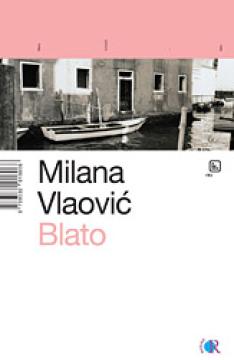
Blato

Blato

Milana Vlaović

Miana Vlaović's debut novel is a story about three generations of women in a patriarchal province, filled with recurring patterns of fate - love, betrayal, poverty, violence, and small struggles for dignity.

Blato is the first novel by Milana Vlaović (born Bebić, 1971), a famous Croatian journalist, composer of pop hits (e.g. for Doris Dragović, Tajči) and wife of former footballer Goran Vlaović. The novel surprised critics and the audience: a "light read" by a celebrity author was expected, but what was obtained was a serious, emotional and realistic portrayal of women's destinies in a conservative, patriarchal environment.

The plot follows three generations of women – a grandmother, a mother and a daughter – in a small town where life revolves around family, men, poverty and social norms. Women are trapped in repetitive patterns: early marriage, violence, infidelity, financial dependence, but also the quiet strength and solidarity between them. The novel is not a classic love story, but a chronicle of everyday "mud" – boredom, suffering, small joys and the struggle to break out of the vicious circle. The characters are realistic, without idealization: men are often weak or violent, women are brave but vulnerable.

The style is accessible, the narrative flows like a TV series (as critics have noted – with episodes, dramatic twists, cliffhangers), but with deep empathy and a feminist undertone. Vlaović avoids kitsch and sensationalism, focusing on psychological depth and social context. The book was a bestseller, receiving praise for its authenticity and emotional power ("it moves to tears"), although some criticized the "lighter" form.

Mud laid the foundation for Vlaović's prose: later came Honey Bombs (the island of Vis, patriarchy), Hunger (more complex relationships), and a collection of stories. It remains a popular "women's letter" with a serious message about the legacy of patriarchy and female strength in the provinces.

Editor
Miljenko Jergović
Dimensions
23 x 14.5 cm
Pages
187
Publisher
V.B.Z, Zagreb, 2007.
 
Latin alphabet. Paperback.
Language: Croatian.
ISBN
978-9-53201-806-6

One copy is available

Condition:Unused
 

Are you interested in another book? You can search the offer using our search engine or browse books by category.

You may also be interested in these titles

Moj život

Moj život

Maksim Gorki
Naklada Binoza, 1932.
Croatian. Latin alphabet. Hardcover with dust jacket.
6.99
I ne reče ni reči

I ne reče ni reči

Heinrich Böll

In Boll's novels, one of the central themes is the attempt to preserve basic moral values ​​in a time of terror, as well as in a period of material prosperity and corruption.

Svjetlost, 1965.
Serbian. Latin alphabet. Paperback.
3.22 - 3.98
Ravnodušni ljudi

Ravnodušni ljudi

Alberto Moravia

The novel follows the declining Roman bourgeois family of Ardengo over the course of several days: widow Mariagrazia, lover Leo, son Michele, and daughter Carla – all trapped in apathy, lies, sexual manipulation, and moral indifference.

Otokar Keršovani, 1966.
Croatian. Latin alphabet. Hardcover.
3.22
Vrijeme nasilja

Vrijeme nasilja

Jean-Pierre Simon

A Time of Violence (1966) is an anti-war and activist novel by French writer Jean-Pierre Simon, a lesser-known author from the mid-20th century, whose work bears traces of leftist literature of the 1930s and 1940s.

Svjetlost, 1965.
Croatian. Latin alphabet. Paperback.
2.46
Mati

Mati

Maksim Gorki

Maxim Gorky's novel "Mother" was published in 1906 and is one of the key works of Russian social realism. The work depicts the awakening of the working class in Russia through characters and events that emphasize social injustices and the need for revolut

Svjetlost, 1975.
Croatian. Latin alphabet. Hardcover.
4.26
Španjolski vrtlar

Španjolski vrtlar

Archibald Joseph Cronin

Cronin's novel masterfully depicts the conflict between cold intellect and warmth of heart, the harmfulness of possessive love and the healing power of true human intimacy. The novel is at once a tender story about a child's soul and a sharp critique of e

Otokar Keršovani, 1966.
Croatian. Latin alphabet. Hardcover with dust jacket.
5.42