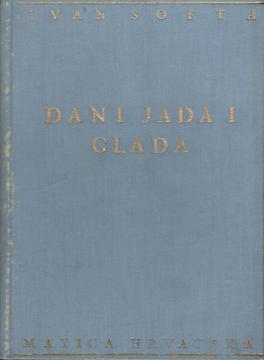
Dani jada i glada
A novel by Ivan Softa about life in a Herzegovinian village during World War I. It realistically and poignantly depicts misery, hunger, disease, war mobilization, and the suffering of peasants, condemning war and social injustices.
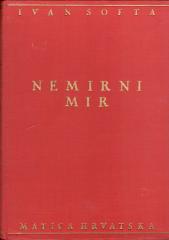
Ivan Softa (Sopta) (1906–1945), a Croatian writer from Herzegovina, published the novel Dani jada i glada in 1937, published by Matica hrvatska in Zagreb. It is his second novel, after Na cest (1936).
The work is a powerful social-realist depiction of life in a Herzegovinian village during World War I. Softa, who himself came from a poor peasant family, authentically describes the daily struggle for survival: chronic hunger, food shortages, forced mobilization into the Austro-Hungarian army, disease, death, and the destruction of traditional village life. The novel follows the fates of ordinary peasants, women, and children who are left alone on the rugged Herzegovinian land, bearing the burden of war and misery.
The author writes with deep compassion for the common man, sharply criticizing the war, the government, and the social order that bring suffering to ordinary people. The style is realistic, sometimes naturalistic, with a rich Herzegovinian dialect and folklore. The novel exudes a strong anti-war stance and social sensitivity, which makes it a typical interwar work of engaged literature.
In Croatian literature, Days of Poverty and Hunger stands out as one of the most successful depictions of everyday life in Herzegovina and the horrors of war. Softa died in 1945 on the Stations of the Cross, so his work was neglected after the war.
Today, the novel is valued as an important document of social prose and Herzegovinian themes in 20th-century Croatian literature. Antiquarian editions are rare and sought after.
Two copies are available