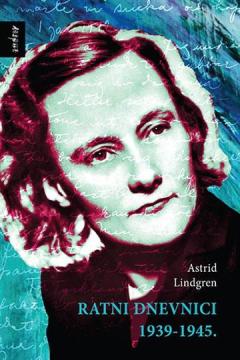
Ratni dnevnici 1939 - 1945.
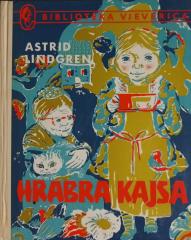
In 2013, 17 printed notebooks full of newspaper clippings and letters were found in a wicker laundry basket in the apartment of Astrid Lindgren (1907-2002), one of the world's most famous children's writers and author of Pippi Longstocking.
These were the diaries that Astrid kept from 1939 to 1945. At the time, the 32-year-old mother of two children took up the task of recording the events of those difficult war years in detail, trying to understand what was happening in the world. However, Astrid still knew more about the war than the average person at the time because she worked in the state administration in the mail censorship, a job that was secret and that she was not allowed to talk about or reveal the information she learned. This job was obviously not without risks, but that still did not stop Astrid from commenting on the information she learned in the diary. Along with newspaper clippings and pictures, there was so much additional material that in the end only a small part ended up in the book. The book is an authentic document of the time that shows in detail the everyday life of (middle-class) Swedish people, life in neutral Sweden while the rest of the world was at war, and the people's sense of gratitude for being spared the horrors that were reported in detail in the newspapers and on the radio. The diaries also provided insight into the private life and early career of the great writer. However, the diaries soon revealed the fact that Sweden had not yet fully come to terms with its role in World War II and was reluctant to accept any questioning of the government's decisions at the time and its own neutrality. The diaries simply shattered some myths that some Swedes held dear, for example, that Sweden only learned about the existence of concentration camps after the war ended, while Astrid's diaries clearly show that the newspapers had written about it as early as early 1942 and that people had been talking about it from the very beginning (she saw evidence in the letters she censored). Her diary entries clearly show her great humanity and empathy. She shows understanding for the hatred of refugees towards their hosts, for young people who are inclined to destruction out of patriotism. She sympathizes with the soldiers of both sides in the conflict, with the mothers of the fallen soldiers, she mourns the loss of so many lives, and finds it difficult to accept that humanity has learned nothing after the bloody First World War.
One copy is available