Bosna i Hercegovina: Opisana i ocrtana
Rudolf Baron Maldini Wildenhainski vividly describes the natural beauties, landscapes, old towns and customs of Bosnia and Herzegovina at the beginning of the 20th century. Bibliophile edition on kunstdruck paper with 136 images.
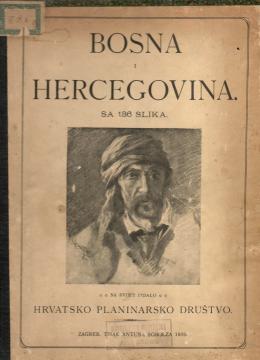
Bosnia and Herzegovina. Described and Outlined by Rudolf Baron Maldini Wildenhain (1909) is an exceptional bibliophile monograph and travelogue from the Austro-Hungarian period. The book is printed on high-quality kunstdruck paper with an original Art Nouveau binding (but is also available in a softcover, like this one, for a more affordable edition). It contains an impressive 136 black-and-white illustrations – nature photographs, reproductions of drawings and paintings – that depict the most beautiful scenes of the country and its people.
The author, a Croatian writer, translator and former officer who served in Bosnia (b. 1870 in Zagreb), a nature lover, leads the reader through diverse landscapes. The book is divided into two parts: Bosnia (pp. 1–126) and Herzegovina (pp. 127–157). It describes natural beauties such as the Treskavica and Ivan-planina mountains, waterfalls, canyons and rivers, and historical sites such as Vranduk, Ključ, Bobovac, Jajce, Trebinje and other old towns.
Maldini highlights the geographical, natural and cultural values of Bosnia and Herzegovina, depicting the progress, customs of the population and everyday life at that time. The aim of the work, as stated in the introduction, is to introduce the reader to “some of the most wonderful images of the country and its people, its culture and progress, as it stands today.” The book begins with an introduction by Vjekoslav Novotni and the poem “Herceg-Bosni” by the author himself.
This is a valuable historical testimony about Bosnia and Herzegovina from the beginning of the 20th century, ideal for lovers of travelogues, mountaineering, Balkan history and old photography. Today, the original editions are considered rarities in antiquarian books, and the monograph remains a classic example of the promotion of the natural and cultural beauties of the region in Croatian literature of that time. The format is large (about 24 × 31.5 cm), which emphasizes the visual splendor of the illustrations.
The book exudes enthusiasm for nature and homeland, making it an inspiring read even today for those who want to get to know Bosnia and Herzegovina as it was more than a century ago – rich, picturesque and full of contrasts.
One copy is available