Documenta historiam Croaticam spectantia
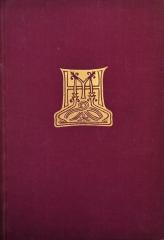
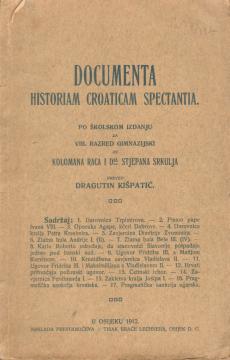
"Documenta historiam Croaticam spectantia" is a collection of historical sources and documents for Croatian history, intended for the 8th grade of high school. A classic school manual of Croatian historiography at the beginning of the 20th century.
Documenta historiam Croaticam spectantia (Croatian: Documents relating to Croatian history) is a selection of historical documents, letters, charters, chronicles and other sources important to Croatian history, primarily intended as a school manual for the 8th grade of high school. It was compiled according to the school needs of the time, so that students would have direct access to original historical sources instead of just narrative textbooks.
Koloman Rac (1863–1937), a classical philologist, professor and principal of the high school, and Stjepan Srkulj (1862–1926), a famous Croatian historian and textbook author, prepared the original version. Dragutin Kišpatić (1882–1925), a classical philologist and translator from Osijek, translated it for the needs of Croatian schools.
The collection contains key documents from Croatian medieval and recent history (from the early Middle Ages to the 19th century), including texts that testify to Croatian statehood, relations with Hungary, Venice, the Habsburgs and other neighbors. The texts are accompanied by short comments and explanations, which taught students to work critically with historical sources.
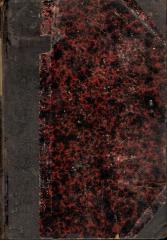
This Osijek edition from 1912 bears witness to the efforts of Croatian intellectuals during the Austro-Hungarian era to have Croatian history more strongly affirmed in the school system and for students to work with primary sources in the Croatian language. It was part of a broader movement for national building through education.
Today, this edition is a rare antiquarian copy, sought after among collectors of old historiography and school books. It represents an important step in the development of Croatian historical science and history teaching at the turn of the 19th and 20th centuries.
The book is ideal for lovers of Croatian history, researchers of school curricula from the Austro-Hungarian era, and those studying history teaching methodology. A valuable source for working with original documents and a testament to the pedagogical approach of that time.
One copy is available