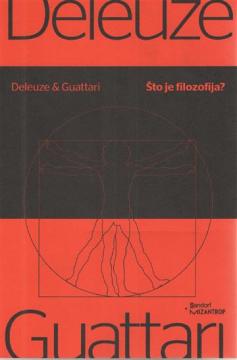
Što je filozofija?

Što je filozofija?

Gilles Deleuze, Félix Guattari

Deleuze and Guattari in What is philosophy? define philosophy as the creation of new concepts on the level of immanence, distinguishing it from science (function) and art (percepts and affects).

What is Philosophy? (1991) is the last joint work of the two great thinkers and one of the most important metaphilosophical books of the 20th century. The book was written late in the lives of both authors and brings a mature, crystallized view of the nature of philosophy.

Deleuze and Guattari resolutely reject the usual definitions: for them, philosophy is not contemplation, reflection, communication, or the search for eternal truths. Instead, philosophy is a creative activity – the art of creating new concepts.

The authors distinguish three great ways of thinking that touch but do not mix:

  • philosophy, which creates concepts on the plane of immanence,
  • science, which creates functions on the plane of reference,
  • art, which creates percepts and affects on the plane of composition.

There is a particularly strong emphasis on the plane of immanence as the premise of every philosophy – it is the field in which concepts are born and connected. The book also introduces the concept of conceptual persona (the philosopher is not only the author, but also the friend or lover of the concept he creates).

The style is rich, intense and typically Deleuzian – full of neologisms, dynamic and poetic. The work contains brilliant pages on the history of philosophy, on the relationship of philosophy to old age and friendship, and on its role in a world dominated by capitalism and the media.

What is philosophy? represents a kind of testament to Deleuze-Guattari's thought. The book is not only a metaphilosophical discussion, but also a strong defense of the creativity of thought against its commercialization and trivialization. It remains an indispensable read for anyone interested in contemporary philosophy, art and the epistemology of creation. In its Croatian translation, it quickly became a cult classic among younger generations of philosophers and artists.

Original title
Qu'est-ce que la philosophie?
Translation
Marko Gregorić
Editor
Slavko Amulić
Graphics design
Gabrijela Farčić
Dimensions
23 x 15.5 cm
Pages
168
Publisher
Sandorf, Zagreb, 2017.
 
Latin alphabet. Paperback.
Language: Croatian.

One copy is available

Condition:New
 

Are you interested in another book? You can search the offer using our search engine or browse books by category.

You may also be interested in these titles

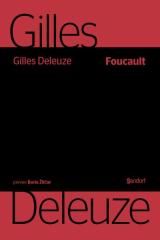
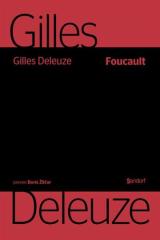
Foucault

Foucault

Gilles Deleuze

Deleuze's Portrait of Foucault (1986) is not a monograph, but a creative "thinking with Foucault." It analyzes the archaeology of knowledge, introducing the concepts of archive, power, subjectification, and "fold" as crucial to Foucault's thought on knowl

Sandorf, 2023.
Croatian. Latin alphabet. Paperback.
11.86
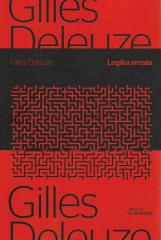
Logika smisla

Logika smisla

Gilles Deleuze

Gilles Deleuze's The Logic of Sense (1969) is one of his most important philosophical works. It explores the nature of sense, events, surfaces, and nonsense through the paradoxes of language, Stoic philosophy, and literature (Lewis Carroll).

Sandorf, 2015.
Croatian. Latin alphabet. Paperback.
19.56
Proust i znakovi

Proust i znakovi

Gilles Deleuze

Deleuze's philosophical reading of Proust's masterpiece "In Search of Lost Time." Deleuze interprets the novel as a system of signs and teaches how art produces higher cognition through the signs of love, memory, and art.

Sandorf, 2020.
Croatian. Latin alphabet. Paperback.
9.34
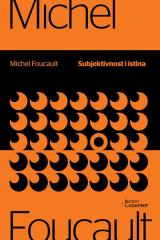
Subjektivnost i istina: Predavanja na Collège de France, 1980.–1981.

Subjektivnost i istina: Predavanja na Collège de France, 1980.–1981.

Michel Foucault

Foucault explores how in antiquity subjectivity and truth were linked through the relationship to the body, pleasures, and self-care, and how this connection gradually changed towards the Christian model of confession.

Sandorf, 2019.
Croatian. Latin alphabet. Paperback.
19.00
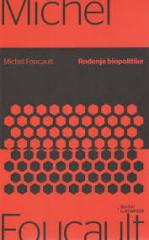
Rođenje biopolitike

Rođenje biopolitike

Michel Foucault

Michel Foucault's The Birth of Biopolitics are lectures he gave in 1978–1979 at the Collège de France in which he analyzes the emergence of neoliberalism, government, biopolitics, and contemporary forms of power.

Sandorf, 2016.
Croatian. Latin alphabet. Paperback.
19.26