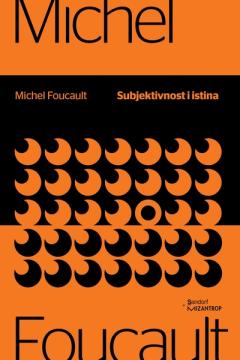
Subjektivnost i istina: Predavanja na Collège de France, 1980.–1981.
Foucault explores how in antiquity subjectivity and truth were linked through the relationship to the body, pleasures, and self-care, and how this connection gradually changed towards the Christian model of confession.
Subjectivity and Truth is one of Foucault's most important late works, delivered as lectures at the Collège de France in 1980/1981. In it, Foucault shifts the focus from power and knowledge to the question of how the Western subject has historically shaped itself in relation to truth.
The course represents a significant turn in Foucault's thought. Instead of analyzing modern mechanisms of control, he delves deeply into ancient Greece and Rome, especially the Hellenistic and Roman periods. He examines how people at that time experienced sexual pleasure (aphrodisia), marriage, the body, and self-care, and how these areas served as spaces for the formation of the ethical subject. Foucault shows that ancient philosophy and medicine were not just theories, but practical frameworks within which the individual worked on himself - directing his desires, managing his body, and seeking the truth about his own existence.
The book reveals the gradual transformation of these ancient practices towards what would later become the Christian care of the soul and the hermeneutics of the subject. Foucault subtly traces how the relationship to the self and to truth changed over the centuries, preparing the ground for the later Western conception of sexuality and the inner life.
The style of the lecture is rich, precise and full of historical references, but at the same time fluid and inspiring. The work serves as an important bridge between Foucault's earlier analyses of power and his later ethics of the subject. It represents an indispensable reading for understanding how Western culture constructed the idea of the self through the relationship to the body, desire and truth.
In the Croatian translation from 2019, the book became available to a wider audience and was quickly recognized as one of the most accessible and significant of Foucault's late works.
No copies available
The last copy was sold recently.