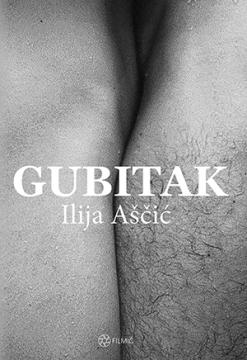
Gubitak

Gubitak

Ilija Aščić

The novel "Loss" is the first novel by Ilija Aščić, a journalist, photographer, videographer and writer, known for his collection of stories "How I Became Evil". In this novel, the author creates a powerful, raw and merciless portrait of the post-war gene

The main character Vladimir Kovačev grew up in a working-class neighborhood near Bjelovar. The war threw him into exile at the age of twelve, and the consequences of this traumatic experience shaped his entire life. The novel is divided into four parts ("Boys", "Searchers", "Adventurers", "Losers") and follows Kovačev in his early twenties in Zagreb - through a series of low-paying jobs, pennilessness, alcohol, wanderings around Europe, failed studies, numerous erotic adventures and failed relationships.

Asčić's style is direct, cynical, analytical and full of interior monologues - little dialogue, a lot of introspection and social criticism. The novel is at the same time an intimate story about the search for meaning, love and friendship, and a sharp criticism of the transitional Croatian society in which honest work does not bring a decent life, and the cards are dealt unfairly from the start. It poses difficult existential questions: can happiness be found again after the war and the loss of faith in the world? Is there a way out of the purgatory of survival? Is freedom possible in a system that turns the individual into an object of the elements?

Critics praise the book as a small encyclopedia of the lowest-paid jobs, the diary of a wanderer and erotomaniac, and as an important voice of those who were thrown "underground" by the war. Without false optimism and happy endings, the novel radiates rawness, repetition, and brutal honesty of life. Ideal for lovers of engaged, introspective prose in the tradition of contemporary Croatian literature that does not shy away from darkness.

Aščić's personal experiences and philosophical positions are visible on every page, making Loss a powerful, authentic, and disturbing work.

Editor
Siniša Matasović
Illustrations
Anna Försterling
Graphics design
Tihomir Kosić
Dimensions
21 x 15 cm
Pages
404
Publisher
Filmić, Zagreb, 2023.
 
Latin alphabet. Hardcover.
Language: Croatian.

One copy is available

Condition:Unused
Specificity of this instance:
Author signature
 

Are you interested in another book? You can search the offer using our search engine or browse books by category.

You may also be interested in these titles

Brdo

Brdo

Ivica Prtenjača

It is a deeply disturbing text, full of emotions and traumatic experiences of a collapsed, imploded urban individual crying out for the meaning of life.

VBZ, 2014.
Croatian. Latin alphabet. Paperback.
7.82
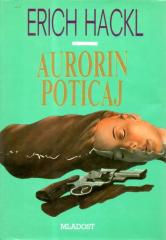
Aurorin poticaj

Aurorin poticaj

Erich Hackl

The work is based on a true event that occurred in Spain in 1933: Aurora Rodriguez killed her daughter Hildegart, a famous fighter for women's emancipation and a cult figure on the political scene of the time.

Mladost, 1990.
Croatian. Latin alphabet. Hardcover with dust jacket.
4.96 - 4.98
Ljubičice u srijedu

Ljubičice u srijedu

Andre Maurois

André Maurois, a French writer known for his psychological novels and biographies, explores themes of family relationships, love, and internal conflicts in this work, which is characteristic of his style.

Svjetlost, 1965.
Croatian. Latin alphabet. Paperback.
3.42 - 3.62
Proces

Proces

Franz Kafka

Kafka wrote The Process between 1914 and 1915, published posthumously in 1925. The novel is unfinished but with an added final chapter by Max Brod. Edition with a foreword by B. Živojinović and an afterword by Walter Killi.

BIGZ, 1990.
Serbian. Latin alphabet. Paperback.
4.26
Djetinjstvo

Djetinjstvo

Lav Nikolajevič Tolstoj

Childhood (1852) is the first book of an autobiographical trilogy (with Adolescence and Youth), where Tolstoy explores the world of childhood through the eyes of a ten-year-old boy, Nikolinka Irtenjev – innocence, joys, sorrows and first traumas.

Svjetlost, 1971.
Croatian. Latin alphabet. Hardcover.
6.54
Tri mušketira 1-2

Tri mušketira 1-2

Alexandre Dumas

Dumas' version of the story depicts the adventures of d'Artagnan and his friends from 1625 to 1628.

Epoha, 1966.
Croatian. Latin alphabet. Hardcover with dust jacket.
The book consists of two volumes
9.48