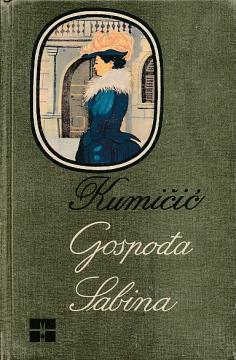
Gospođa Sabina
The naturalistic novel depicts the moral decline of Zagreb's high society through the character of the calculating Sabina, whose greed and scheming lead to familial and financial ruin.
"Gospođa Sabina" (Mrs. Sabina) is one of Eugen Kumičić's most famous novels; published in 1883, it is considered a seminal work of Croatian naturalism. Set in Zagreb, the story follows the life of the titular heroine, the wife of a nobleman and high-ranking government official. Sabina is an intensely power-hungry, vain, and materialistic woman whose sole ambition is to climb the social ladder and maintain the glittering façade of the high aristocracy. To fund her lavish and extravagant lifestyle, she engages in a series of dubious financial schemes, manipulates those around her, and ruthlessly exploits her husband's position and the weaknesses of others. Her home becomes a hub for the Zagreb elite, yet behind the scenes of elegance and social gatherings lie hypocrisy, deceit, and moral decay. In the novel, Kumičić consistently employs naturalistic techniques, offering a detailed analysis of how social environment and human instincts drive an individual's downfall. Through the tragic resolution and the collapse of the family, the author sharply criticizes the corruption and superficiality of the urban society of that era. "Gospođa Sabina" remains a powerful study of human greed and social hypocrisy in Croatian literature.
One copy is available