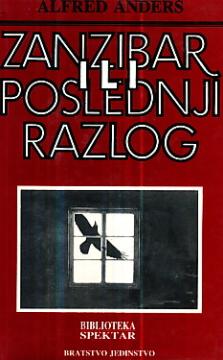
Zanzibar ili posljednji razlog
The existentialist novel follows five alienated individuals in a small Baltic town under Nazi rule, unexpectedly brought together by a dangerous mission to save a forbidden wooden sculpture—and their own lives.
"Zanzibar or the Last Reason" (Zanzibar oder der eine Grund, 1957) is one of the most important works by the post-war German writer Alfred Andersch. Set in the autumn of 1937 in the small Baltic town of Rerik, the story unfolds over the course of just twenty-four hours. Through shifting perspectives, the novel follows five seemingly disparate characters—each bearing their own burdens, fears, and longing for freedom—within the oppressive atmosphere of the Nazi regime. The cast includes Gregor, a communist official; a boy dreaming of a distant, free Zanzibar; Judith, a Jewish girl fleeing persecution; Helander, an Old Testament pastor; and Knudsen, a fisherman. Their fates intertwine around a secret mission: saving the wooden sculpture The Reading Monk (Der Lesende Klosterschüler) by the Expressionist artist Ernst Barlach—a work the Nazis had branded "degenerate art" and slated for destruction. Andersch masterfully employs the sculpture as a symbol of human dignity, spiritual resistance, and freedom of thought. Smuggling the artwork across the border into Sweden becomes a pivotal moment in which each character discovers their own "last reason" for action and personal choice. The novel stands as a powerful existentialist study of moral responsibility, inner freedom, and resistance to totalitarianism.
One copy is available